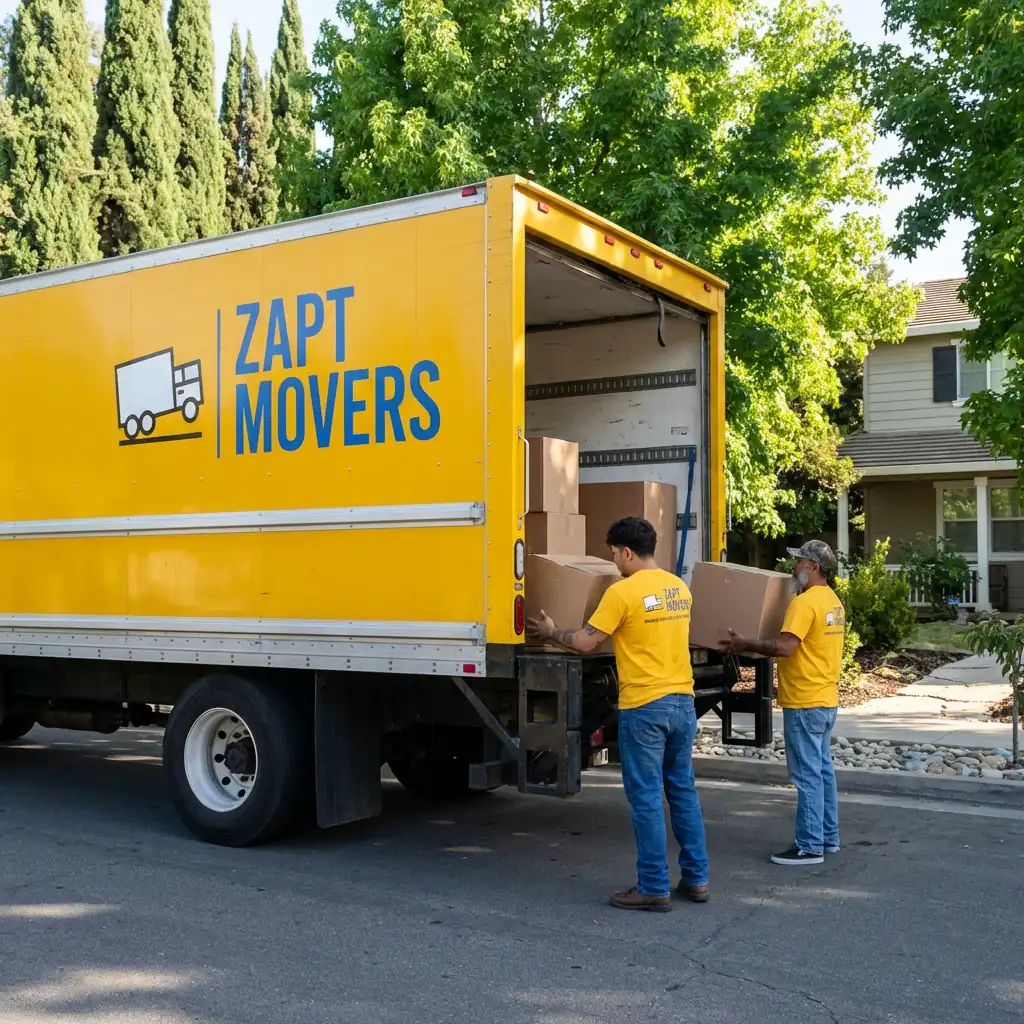
We drive this route often enough that our crews have opinions about which stretch of I-20 has the worst coffee. California to Dallas–Fort Worth has become one of the most common long-distance moves in the country, and most of the advice online about it is written by people who have never loaded a truck. This is the version we give customers on the phone.
What actually drives the price
Long-distance moving is not priced like a local move. A local job is mostly about hours: crew size times time on the clock. A cross-country job is priced on weight or volume, distance, and access — and the biggest single lever is how much stuff is on the truck.
Which means the cheapest thing you can do to lower a California-to-Texas quote has nothing to do with negotiating. It's getting rid of things. Every mover will tell you this and almost nobody does it early enough. A garage full of paint cans, a treadmill nobody uses, a sofa you already dislike — that is billable weight riding 1,500 miles.
The other factors that move the number:
- Access on both ends. A third-floor walk-up in the Mission with no loading zone costs more than a suburban driveway. So does a Frisco cul-de-sac where a 53-foot trailer can't turn around and we have to shuttle with a smaller truck.
- Packing. Full pack, partial pack, or you do it yourself. This is usually the second-largest line item after the base transport.
- Specialty items. Pianos, safes, large artwork, wine collections. These need crating, and crating is labor.
- Timing. May through September is peak season everywhere, and the first and last few days of any month are the busiest. Moving mid-month, midweek, in October is cheaper than the last Saturday in July. It is not close.
Be careful with quotes given over the phone in under two minutes with no inventory. A number that low usually means the inventory was guessed, and guessed inventories get "revised" once the truck is loaded and your things are already on it. Ask for the quote in writing, with the inventory attached, and ask directly whether the price can change on move day.
How long the truck really takes
San Francisco to Dallas is roughly 1,750 miles of driving. Los Angeles to Dallas is about 1,435. A driver is legally limited in how many hours they can be behind the wheel per day, so nobody is doing that in one go, no matter what they promise you.
Realistically, transit is a few days on the road. What determines your actual delivery date is not the driving — it's whether your shipment has a dedicated truck or is sharing space with other households.
Shared loads are cheaper and the delivery window is wider, sometimes considerably. Dedicated costs more and gives you a date. Neither is wrong — but you need to know which one you bought, because it decides whether you're booking a hotel for two nights or two weeks. Ask before you sign.
Want the real number for your move?
Send us your address, your destination, and the size of your place. You'll have a written quote the same day.
Your first 90 days in Texas
This is the part almost everyone underestimates. Texas has a clock on new residents, and it starts when you arrive.
Vehicles and licenses
New residents are generally expected to register their vehicles within about 30 days of moving in, and to get a Texas driver's license within about 90 days. Registration in the DFW counties also involves emissions testing. Rules and fees change, so confirm the current requirements with the Texas DMV and DPS rather than trusting a blog — including this one — but put both tasks in your calendar for the first month. The lines at the county tax office are long enough that you don't want to be discovering the deadline on day 89.
Electricity is something you shop for
This one genuinely surprises Californians. Most of DFW sits in a deregulated electricity market, which means you don't inherit a utility — you choose a retail provider and a plan before you move in, the way you'd choose a phone carrier. Plans vary enormously, and the cheap-looking ones often hide their savings behind usage thresholds you have to hit exactly. A few cities in the region run their own municipal utilities instead, so check your specific address. Do this a week before move-in, not the day of. A house with no power is a bad place to unload a truck in August.
Tolls
DFW is threaded with toll roads, and driving them without a tag means paying by mail at a higher rate. Get a toll tag set up early — it's a ten-minute task that quietly saves a lot of money.
Property taxes and the homestead exemption
Texas has no state income tax, which is often the headline reason people move. The trade-off is property tax, which is meaningfully higher than what most Californians are used to. If you're buying, file for the homestead exemption with your county appraisal district. It's free, it's a form, and skipping it is one of the most expensive pieces of paperwork you can forget.
The four things people always forget
- Plants. Live plants generally can't travel on long-distance moves due to agricultural regulations. Decide now whether they're going in your car or going to a neighbor.
- The "open first" box. Sheets, towels, phone chargers, coffee, toilet paper, medication, a knife, a pan. It rides in your car, not the truck. Night one in an empty house is much better with it.
- The garage and the shed. Everybody plans the kitchen and forgets the garage, then discovers on load day that half of it is hazardous material we're not allowed to carry: propane, gasoline, paint, solvents, ammunition, fireworks.
- School enrollment paperwork. Immunization records and proof of residency take longer to gather than you think, and you'll want them before the first day, not after.
Where people actually land in DFW
The metroplex is enormous — it is not one city, it's dozens with different personalities and very different commutes. A rough orientation:
- Uptown and downtown Dallas — high-rise living, walkable pockets, the closest thing to an urban California experience. Expect building move-in policies, elevator reservations, and loading dock windows. We handle those bookings, but they need lead time.
- Plano, Frisco, McKinney, Allen — the northern corridor. New builds, big houses, corporate relocations, strong schools. Also the most HOA gates and the most "please don't park the trailer there" conversations.
- Fort Worth and Arlington — more space for the money, a different character from the Dallas side entirely. Fort Worth has its own downtown and its own identity, and locals will correct you if you treat it as a suburb.
- Irving, Grand Prairie, Mansfield, Carrollton — the middle. Often the practical answer for a household where two people work on opposite ends of the metroplex.
If you have any choice in the matter, drive your likely commute at the actual hour you'd drive it before you sign a lease. Distances on a map in DFW are a poor guide to time in a car.
One last thing about August
If you're arriving in summer, understand what you're walking into. Loading a truck in triple-digit heat is a different job from loading one in San Francisco fog, and it changes what happens to your belongings. Candles and cosmetics liquefy. Vinyl records warp. Electronics that go from a cold truck into a hot house can condense inside. We've written a separate checklist on this, and it's worth ten minutes of your time before you tape a single box.
A move across two time zones is a big thing to take on. The parts that go wrong are almost never dramatic — they're small, boring, and completely preventable with a week of lead time. Give yourself that week.
Moving between California and Texas?
We run this route both directions with our own trucks and our own crews. Free quote, same day, no obligation.