Moving Tips
How to Pack Efficiently for a Move
The Ultimate SF Local’s Survival Guide
Moving Tips
The Ultimate SF Local’s Survival Guide
Moving in the San Francisco Bay Area or Los Angeles isn't just a change of address, it’s a logistical Olympic event. Between the steep hills of Nob Hill, the narrow staircases of Victorian flats, and the legendary traffic on the 405, getting your life from Point A to Point B requires more than just a few cardboard boxes and a roll of tape. It requires a strategy.
I’m Pedro from Zapt Movers, and I’ve seen it all. I’ve seen "organized" moves turn into chaotic scavenger hunts for a missing TV remote, and I’ve seen tiny studio apartments packed so efficiently they’d make a Tetris grandmaster weep with joy. If you’re feeling overwhelmed, take a deep breath. We’re going to break down exactly how to pack like a pro, save space, and keep your sanity intact.
Before you even touch a roll of packing tape, you need to declutter. San Francisco and LA rentals are famous for many things, but "excessive storage space" isn't one of them. Moving is the perfect excuse to get rid of that "vintage" chair you’ve never actually sat in or the three extra blenders you inherited from various roommates.
Think of it this way: every item you donate or sell is one less item you have to carry up a flight of stairs. If you’re looking for movers San Carlos residents trust, they’ll tell you that a lighter load often means a faster, more affordable move. Check out local donation centers or host a "moving out" yard sale. Your future self will thank you when they aren't unpacking a box of 2012 tax returns.
Clothing is usually the bulkiest part of any move, but it’s also the most flexible. Instead of taking every shirt off its hanger, folding it, and stuffing it into a box, try the "garbage bag hack."
Simply keep your clothes on the hangers, group a handful together, and pull a large, heavy-duty trash bag up from the bottom. Tie the drawstrings around the necks of the hangers. When you get to your new place, you just hang them up, rip the bag off, and you’re done. It’s a massive time-saver.
For your non-hanging items, stop folding and start rolling. Rolling your t-shirts and jeans like burritos saves a surprising amount of space and helps prevent deep wrinkles. If you’re dealing with bulky winter coats (yes, even in California we need them for those foggy SF mornings), use vacuum-seal bags to compress them down to practically nothing.
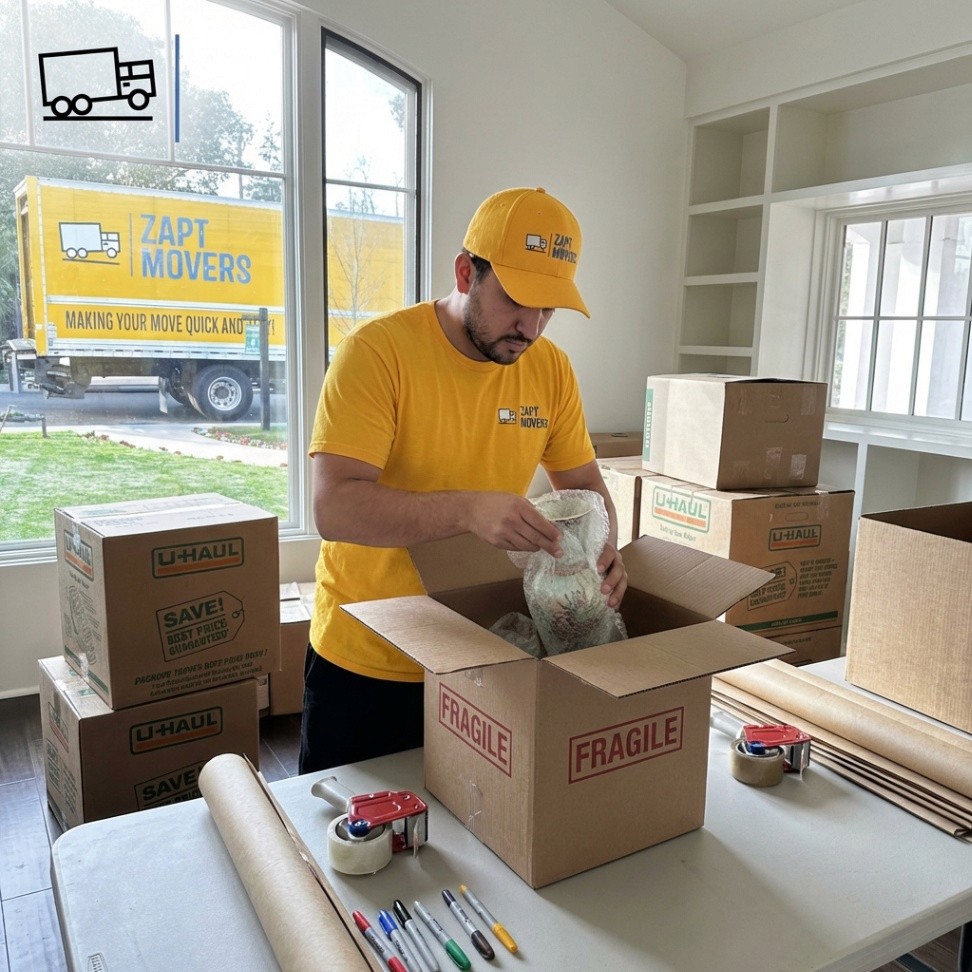
You don’t need to spend a fortune on bubble wrap. Look around your house; you’re literally surrounded by packing materials.
Towels and Linens: Wrap your framed artwork and mirrors in thick bath towels or bed sheets.
Socks: These are perfect for protecting glasses and stemware. Just slide a glass into a clean sock before placing it in the box.
T-shirts: Use them to layer between plates to prevent chipping.
Pot Holders and Oven Mitts: These are great for protecting small, fragile kitchen gadgets.
By using your "soft goods" to protect your "hard goods," you’re essentially packing two things at once. It’s efficient, eco-friendly, and keeps your fragile items safe during residential moving.
If you have rolling suitcases, don't pack them with light clothes: fill them with your heaviest items, like books or your collection of cast-iron pans. Cardboard boxes have a breaking point, and carrying a box of heavy hardcover books up a San Francisco hill is a recipe for a back injury. Suitcases are built to handle weight and, more importantly, they have wheels. Let the wheels do the work!
For everything else, remember the golden rule: Heavy items in small boxes, light items in large boxes. It’s tempting to put all your pillows in one tiny box, but that’s a waste of space. Conversely, a large box full of books is a disaster waiting to happen.
"Kitchen" is a bad label. Why? Because when you’re standing in your new kitchen surrounded by thirty boxes, you won't know which one has the coffee maker and which one has the holiday platters you won’t use for six months.
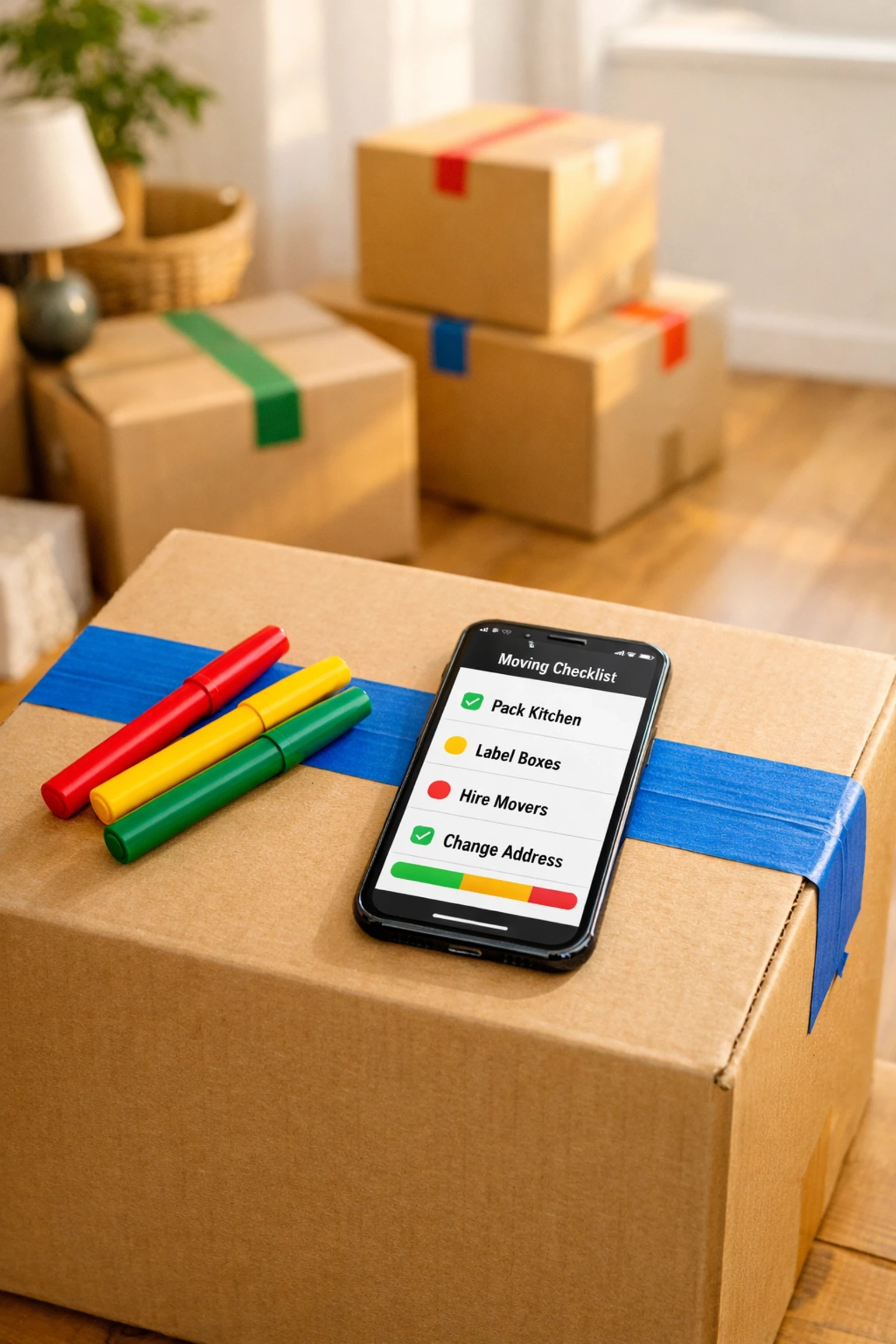
Try a color-coded system. Assign a color to each room (e.g., Blue for Kitchen, Red for Bedroom, Green for Bathroom). Use colored tape or markers on at least two sides of each box. On the top of the box, write a brief inventory of the contents.
Pro Tip: Number your boxes and keep a master list on your phone. If you’re looking for your "good chef’s knife," you can check your list and see it’s in Box #14. If you need a full-service packing service San Francisco, we can take this entire task off your plate, ensuring everything is categorized and handled with care.
The biggest mistake people make is packing their essentials deep inside a random box. Imagine arriving at your new home at 8:00 PM. You’re exhausted, sweaty, and just want a shower and a bed.
Pack a "Day One" box (or suitcase) and keep it with you in your car, not the moving truck. It should include:
Basic toiletries (toothbrush, soap, toilet paper)
A change of clothes and pajamas
Bed sheets and pillows
A few basic tools (screwdriver, box cutter)
Phone chargers
Pet food and bowls
Important documents (passports, leases, etc.)
Having these items handy means you don't have to go on a frantic search for your toothbrush when all you want to do is sleep.
Moving in the SF Bay Area or LA comes with unique challenges. If you’re moving into a high-rise in Downtown LA, you might need to reserve an elevator or look into furniture delivery Los Angeles services that understand tight corners. If you're in the Bay, you have to worry about street cleaning schedules and narrow alleys.
At Zapt Movers, we’re experts at navigating these "California quirks." We know which streets a large truck can’t fit down and how to handle delicate furniture in old buildings. Whether you’re doing a local move or something long-distance, the packing phase is where the success of the move is decided.
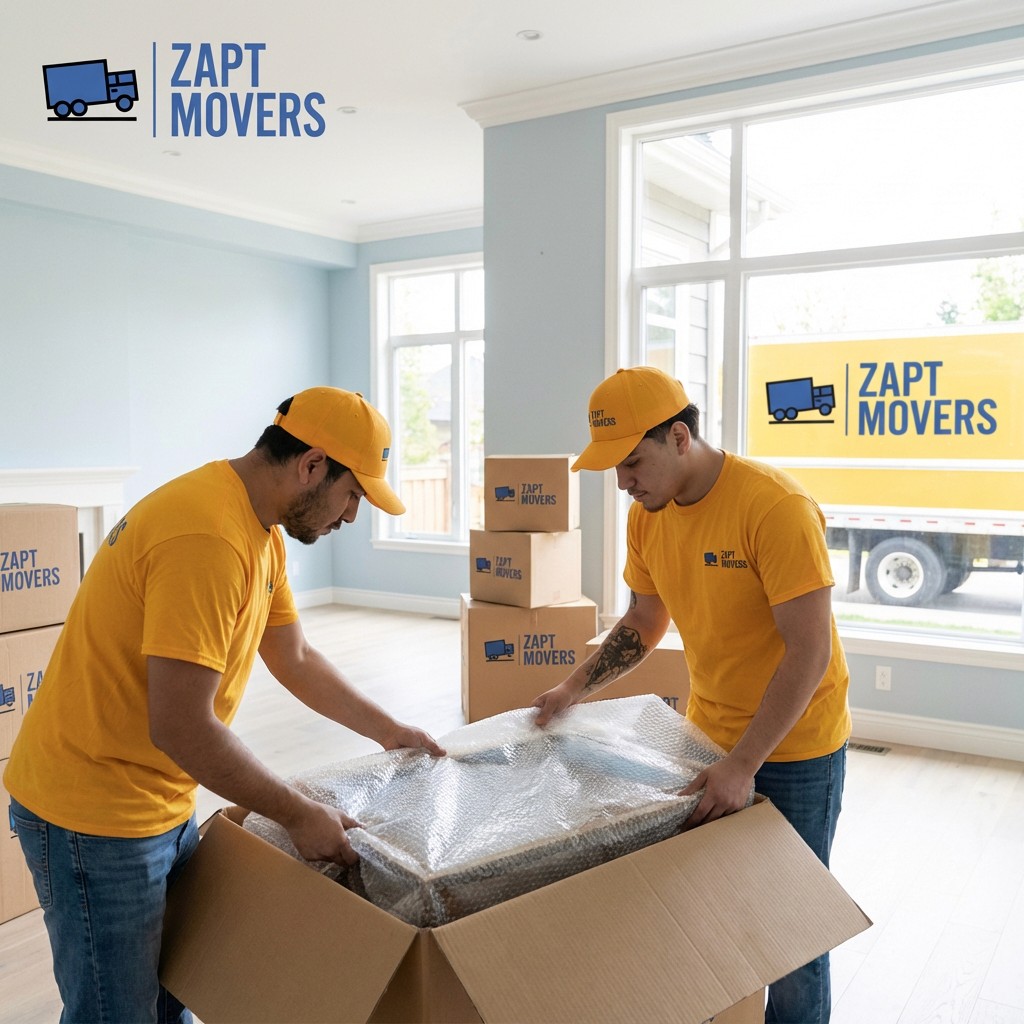
The kitchen is arguably the hardest room to pack. There are so many oddly shaped, fragile, and heavy items.
The Nesting Method: Put smaller bowls inside larger bowls, and smaller pots inside larger pots (with a piece of packing paper or a dishcloth between them to prevent scratching).
Vertical Plates: Never stack plates flat on top of each other. Instead, wrap them individually and stand them up on their edges like records in a crate. They are much less likely to break this way because they can absorb shocks better.
Tape the Drawers: For small items like silverware, you don't even have to empty the tray. Just wrap the entire tray in plastic wrap (Saran wrap works in a pinch!) and put it directly into a box.
Look, we get it: packing is a marathon. If you’re working a 9-to-5, have kids, or simply don't want to spend your weekends surrounded by bubble wrap, there’s no shame in asking for help.
Professional packers can do in four hours what might take you four days. We use high-quality materials, know exactly how to secure fragile items, and we're insured. If you’re curious about the cost, we offer no obligation moving quotes to help you plan your budget.
Whether you need us to handle the whole house or just the "scary stuff" like the kitchen and the artwork, Zapt Movers is here to make the process seamless. Our team is trained in furniture disassembly, so you don't even have to worry about that IKEA bed frame that seems impossible to take apart.
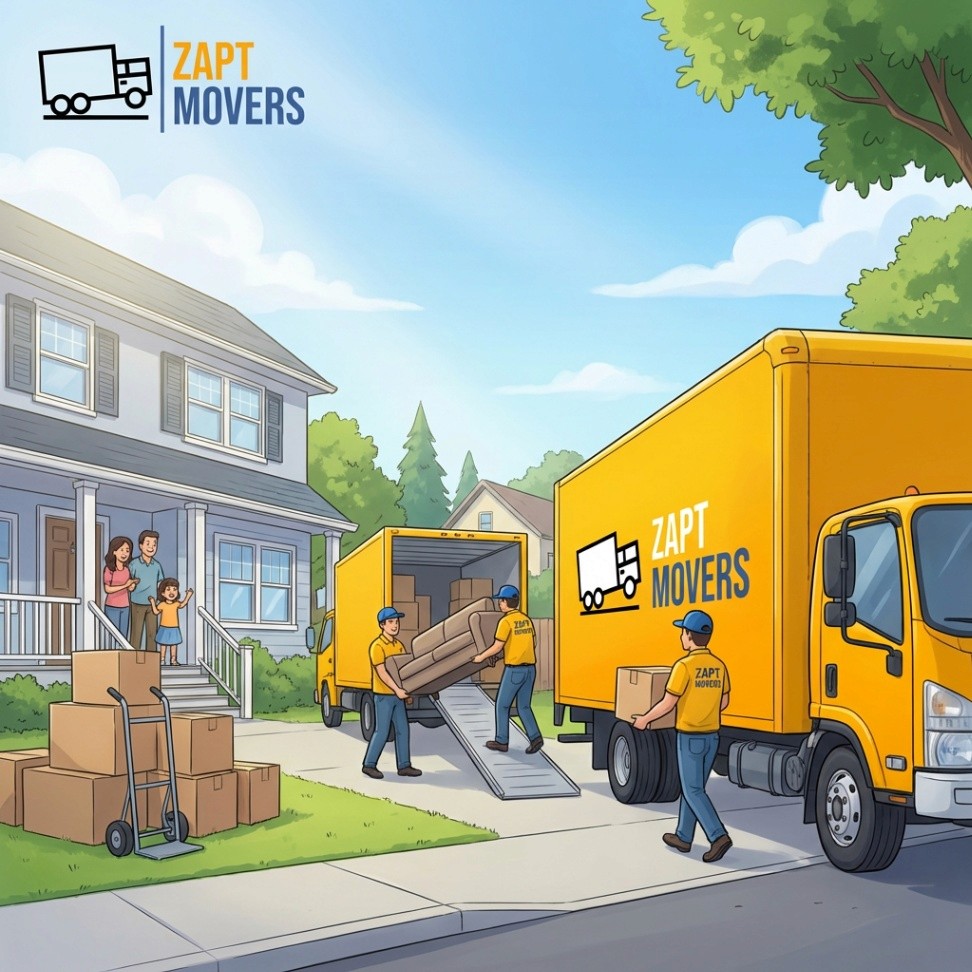
Moving is a transition, and while it can be stressful, it’s also the start of a new chapter. By packing efficiently: purging the old, using smart hacks, and labeling clearly: you’re setting yourself up for a "Day One" that feels like a homecoming rather than a headache.
Take it one room at a time, stay hydrated, and remember that you don't have to do it all alone. If the hills of SF or the traffic of LA start looking a little too daunting, give us a shout at Zapt Movers. We’ve got the trucks, the team, and the local knowledge to get you moved without the drama.
Ready to start your journey? Check out our services or get in touch for a quote today. Happy packing!