Moving and Storage Services Near Me: When Storage Makes Sense
Sometimes the hardest part of moving is not the truck or the packing, it’s the timing. A lease ends before escrow closes. A renovation runs long. A new job starts next week, but your new place is not ready.
Sometimes the hardest part of moving is not the truck or the packing, it’s the timing. A lease ends before escrow closes. A renovation runs long. A new job starts next week, but your new place is not ready.
That’s where moving and storage services near me become more than a convenience. Used the right way, storage can reduce stress, prevent rushed decisions, and even lower the odds of damage (because you’re not re-handling the same items three different times).
Below is a practical guide to when storage makes sense, which storage option fits which scenario, and what to ask so you don’t get surprised by access rules, fees, or limitations.
What “moving and storage services” usually means
When people search “moving and storage services near me,” they’re typically looking for one of these setups:
Movers + warehouse storage (your mover stores your items in a secure facility, then delivers when ready).
Storage-in-transit (SIT) (temporary holding during a move, commonly used for long-distance or timing gaps).
You rent a self-storage unit and hire movers to load/unload.
Portable storage container (dropped at your home, then stored onsite or offsite).
Integrated moving + storage can be simpler because one team can pack, inventory, transport, store, and redeliver. But “simpler” only stays true if the storage terms are clear upfront.
When storage makes sense (and when it doesn’t)
Storage is helpful when it solves a specific timing, space, or risk problem. Here are the most common situations where it’s worth considering.
1) You have a closing or lease gap
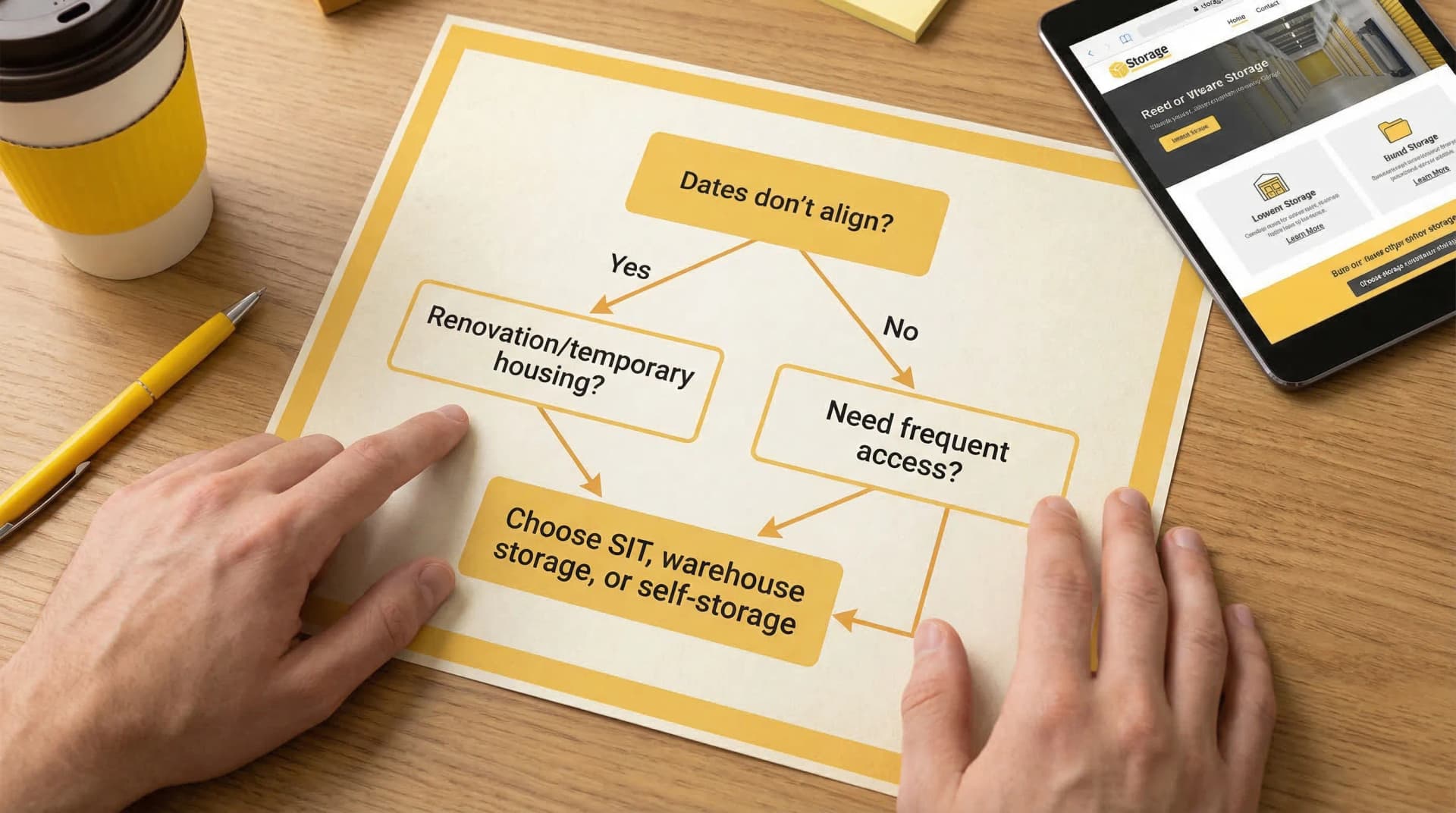
This is the classic reason: your move-out date and move-in date don’t match.
Storage can help you avoid:
Paying for an extra week (or month) at your current place
Moving twice (once to a friend’s garage, then again to your new home)
Rushing to accept a delivery window that doesn’t work
2) You’re moving into temporary housing
Corporate housing, short-term rentals, staying with family, or an extended hotel stay often means you cannot bring everything.
Storage lets you keep essentials with you and hold the rest until you’re settled.
3) You’re renovating or doing major repairs
Renovations create dust, moisture risk, and constant rework. Storing furniture and boxed items offsite protects belongings and can make contractors faster (clear rooms, clear pathways).
4) You’re downsizing (and not ready to decide what to keep)
Downsizing can be emotional and time-consuming. Storage can act as a buffer so you can move first, then decide later.
The key is to set a deadline for decisions, otherwise “temporary” storage becomes permanent spending.
5) You’re combining households
Moving in together often reveals duplicates (two couches, two dining sets, multiple kitchen setups). Storage gives you time to live in the space before deciding what fits.
6) Your building access makes move day risky
In dense areas, move day can be complicated by:
Elevator reservations
Limited loading zones
Permit requirements
Narrow stairs or tight entryways
If the building can only accommodate a short delivery window, storage can reduce pressure. Your items can arrive when access is confirmed, rather than forcing everything into a single high-stress day.
7) You need a cleaner sale or staging plan
If you’re selling, a less cluttered home usually photographs and shows better. Storage can help you stage without permanently getting rid of things.
8) You’re planning a long-distance move with an uncertain delivery date
Long-distance moves often involve delivery windows and variable timelines. Temporary storage (SIT) can prevent you from feeling “stuck” if your new home isn’t ready on the exact day the shipment arrives.
For interstate moves, the FMCSA’s consumer resources discuss planning and documentation, including services like storage-in-transit and what should be in writing. See FMCSA’s moving consumer information for official guidance.
When storage might not make sense
Storage is not automatically the best answer. Consider skipping storage if:
You’ll need frequent access (a storage unit across town can become a weekly time sink)
The items are low-value and replaceable (storage fees can exceed replacement cost)
You haven’t confirmed access terms (retrieval fees and minimum notice periods are common)
Which storage option fits your situation?
Different storage types solve different problems. Here’s a simple comparison to help you choose.
Scenario
Best-fit storage type
Why it fits
Watch-outs
1 to 30-day timing gap
Storage-in-transit (SIT) or mover warehouse storage
Designed for short-term holds during a move
Access may be limited, ask about retrieval fees
Renovation / dust / moisture risk
Offsite warehouse storage or climate-controlled self-storage
Better protection than storing in a garage or on-site
Confirm climate control if storing wood, electronics, art
Downsizing decisions
Self-storage or warehouse storage
Lets you sort on your timeline
Costs add up, set a decision deadline
Need frequent access
Self-storage
You control access
You may handle more logistics, locks, and insurance
Moving cross-state with uncertain delivery
SIT or warehouse storage
Keeps shipment managed by the same logistics chain
Confirm delivery scheduling and notice required
Tight building delivery windows
Warehouse storage
Flexible redelivery timing
Clarify stair/elevator access charges at delivery
The questions that prevent storage surprises
Before you book, ask these questions and get the answers in writing as part of your quote/estimate.
Access and retrieval
Storage is easiest when you do not need anything until redelivery. If you might need items, clarify:
Can I access my items while in storage? If yes, how much notice is required?
Is partial retrieval allowed, or only full delivery?
Are there retrieval or handling fees?
Pricing structure
Storage pricing can be simple or complicated depending on how it’s billed.
Is storage billed monthly, weekly, or daily (prorated)?
Are there minimum storage periods?
Are there warehouse handling fees for inbound/outbound?
If you’re comparing companies, use the same scope. Many “cheap” quotes turn expensive when fees show up later. If you want a framework for spotting scope gaps and cost traps, see Zapt Movers’ guide: 10 Common Moving Pitfalls That Drive Up Cost.
Protection, inventory, and claims
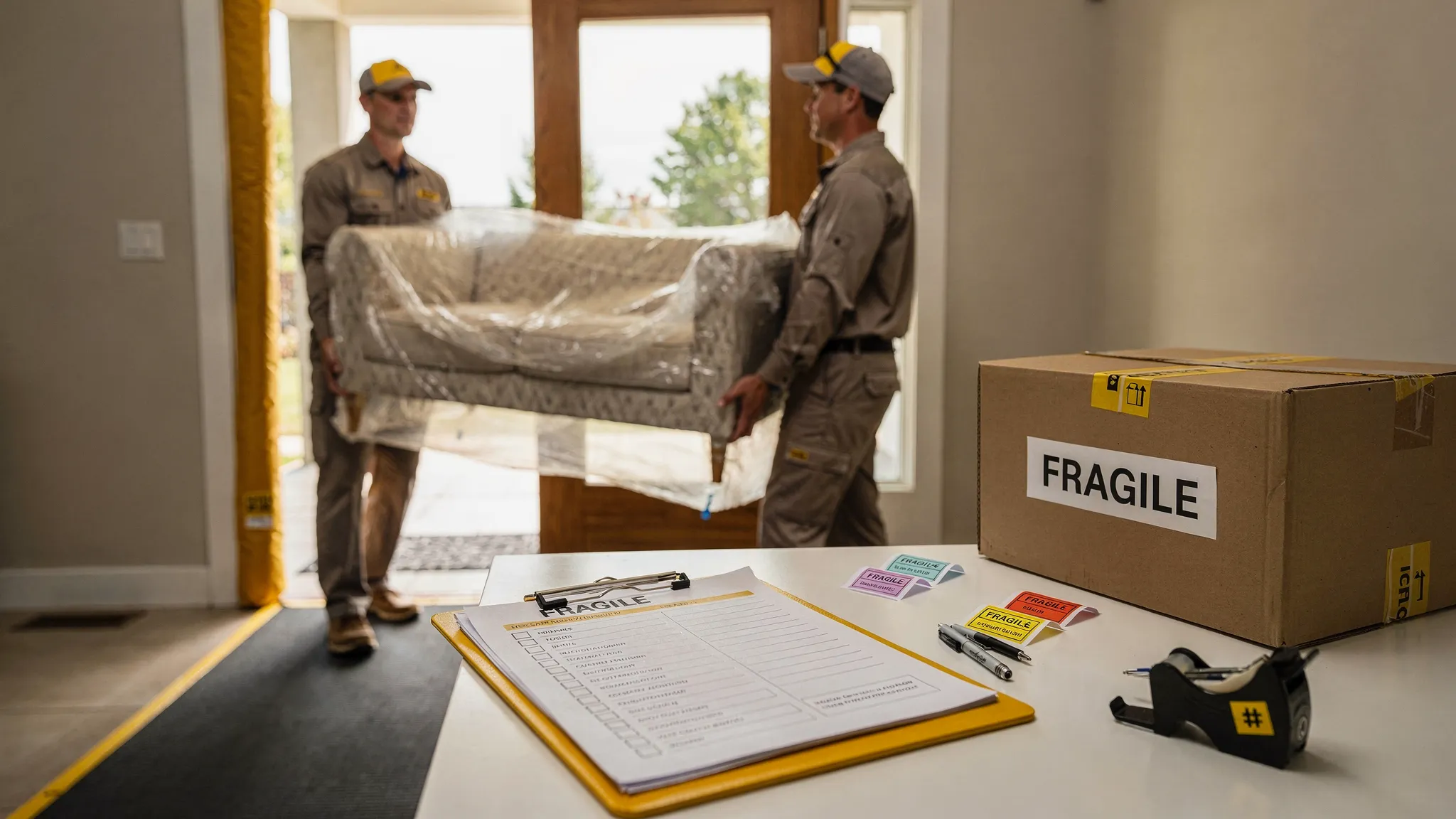
Storage adds time between pickup and delivery, so documentation matters.
Will the mover provide an inventory list?
How are fragile/specialty items packed and stored?
What valuation/protection options apply while in storage?
(For high-value items, ask about specialty handling and make sure it’s documented as part of the scope.)
Conditions: climate, pests, and stacking risk
Not everything needs climate control, but some categories are more sensitive.
Ask:
Is the storage climate-controlled? (Important for wood furniture, instruments, electronics, photos, art.)
How are items stored (vaults, pallets, racking)?
What is the pest prevention approach?
How to prepare items for storage (so you don’t regret it later)
Storage is easiest when you pack with “future you” in mind.
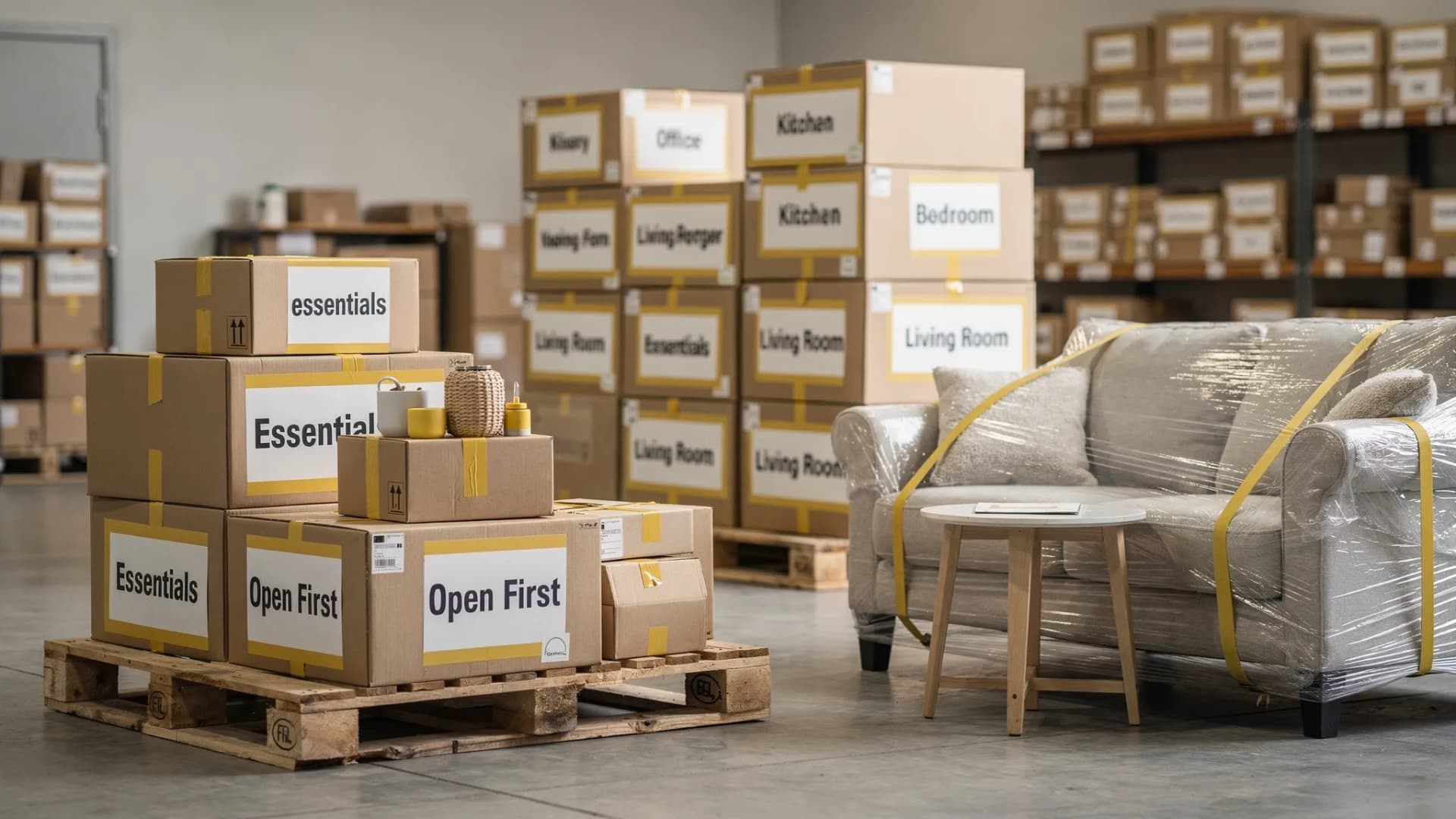
Label for retrieval, not just for rooms
Room labels help on move-in day, but storage labels should help you find categories.
A simple method:
“KITCHEN: daily” vs “KITCHEN: rarely used”
“BEDROOM: winter” vs “BEDROOM: current season”
“DOCUMENTS: keep accessible”
Separate what you’ll need immediately
Do not send essentials into storage. Keep a clearly defined set aside for the first week:
Bedding and towels
Medications
Basic cookware
Work-from-home gear
Kids’ essentials
Pet supplies
Avoid storing certain items
Most movers and storage facilities have restrictions. Common examples include perishable food, flammables, and other hazardous materials.
If you’re unsure, ask your mover what cannot be transported or stored.
“Near me” matters: why local storage coordination can reduce risk
Searching locally is not just about convenience. When your moving and storage provider is truly local and operationally prepared, you often get:
Faster scheduling changes when your dates shift
Fewer handoffs between companies
Better clarity on local logistics (parking, stairs, building rules)
For Californians, it’s also smart to confirm the mover is properly licensed and insured for the type of move you’re doing (intrastate vs interstate). For interstate verification, you can use the FMCSA mover database. For intrastate household goods guidance in California, you can also review the California Public Utilities Commission consumer resources.
A quick decision rule: should you add storage?
If you’re on the fence, this simple rule helps:
Choose storage if it reduces at least one of these:
Time pressure (uncertain dates, limited delivery windows)
You need frequent access and the access rules are restrictive
The items are not worth the ongoing cost
The pricing and terms are unclear or not documented
Frequently Asked Questions
What is storage-in-transit (SIT)? Storage-in-transit is temporary storage used during a move when your shipment cannot be delivered right away. It’s commonly used for long-distance moves or closing-date gaps.
Is it cheaper to use a mover’s storage or rent my own storage unit? It depends on how long you need storage and how often you need access. A self-storage unit can be cost-effective if you want frequent access, while mover storage may reduce handling and coordination.
Can I get something out of storage before delivery day? Sometimes, but not always. Ask whether partial retrieval is allowed, how much notice is required, and whether there are retrieval/handling fees.
Do I need climate-controlled storage? Not always, but it’s often a good idea for wood furniture, electronics, artwork, instruments, photos, and anything sensitive to heat, humidity, or rapid temperature swings.
How do I avoid hidden storage fees? Get storage terms in writing. Confirm billing periods, minimum storage duration, inbound/outbound handling fees, delivery/rescheduling fees, and access rules.
What should I never put into storage? Avoid perishable food, flammables, hazardous materials, and anything you may urgently need (medications, documents, essentials). Your mover can provide a specific restricted-items list.
Need moving and storage in California without the guesswork?
If you’re trying to coordinate tight dates, a renovation, or a long-distance timeline, a combined moving and storage plan can save you a lot of stress, as long as the scope is clear.
Zapt Movers provides residential and commercial moving, professional packing, and secure storage solutions, with upfront honest pricing and licensed and insured service. If you want help deciding whether storage actually makes sense for your situation, start with a quote and a clear storage plan.
Let’s Make Your Next Move Effortless and Worry-Free
Get a free, no-obligation moving quote in under 60 seconds. Our team is available 7 days a week to answer your questions and help you plan the perfect move. Call us, fill out our form, or book online — we’ll take it from there.
Let’s Make Your Next Move Effortless and Worry-Free
Get a free, no-obligation moving quote in under 60 seconds. Our team is available 7 days a week to answer your questions and help you plan the perfect move. Call us, fill out our form, or book online — we’ll take it from there.
Let’s Make Your Next Move Effortless and Worry-Free
Get a free, no-obligation moving quote in under 60 seconds. Our team is available 7 days a week to answer your questions and help you plan the perfect move. Call us, fill out our form, or book online — we’ll take it from there.