Moving Tips
Moving Company Full Service: What’s Included and What’s Not
Moving company full service explained: what’s included, common add-ons, and what’s not. Learn how to compare quotes and avoid surprises.

Moving Tips
Moving company full service explained: what’s included, common add-ons, and what’s not. Learn how to compare quotes and avoid surprises.
When people search for a moving company full service, they usually want one simple thing: a move where professionals handle the heavy lifting, the logistics, and (ideally) most of the packing too. The problem is that “full service” is not a standardized package across the industry. One company may mean “truck + labor,” another may include packing, wardrobe boxes, disassembly, and short-term storage.
This guide breaks down what’s typically included, what’s commonly extra, and what’s usually not included, so you can compare quotes accurately and avoid last-minute surprises.
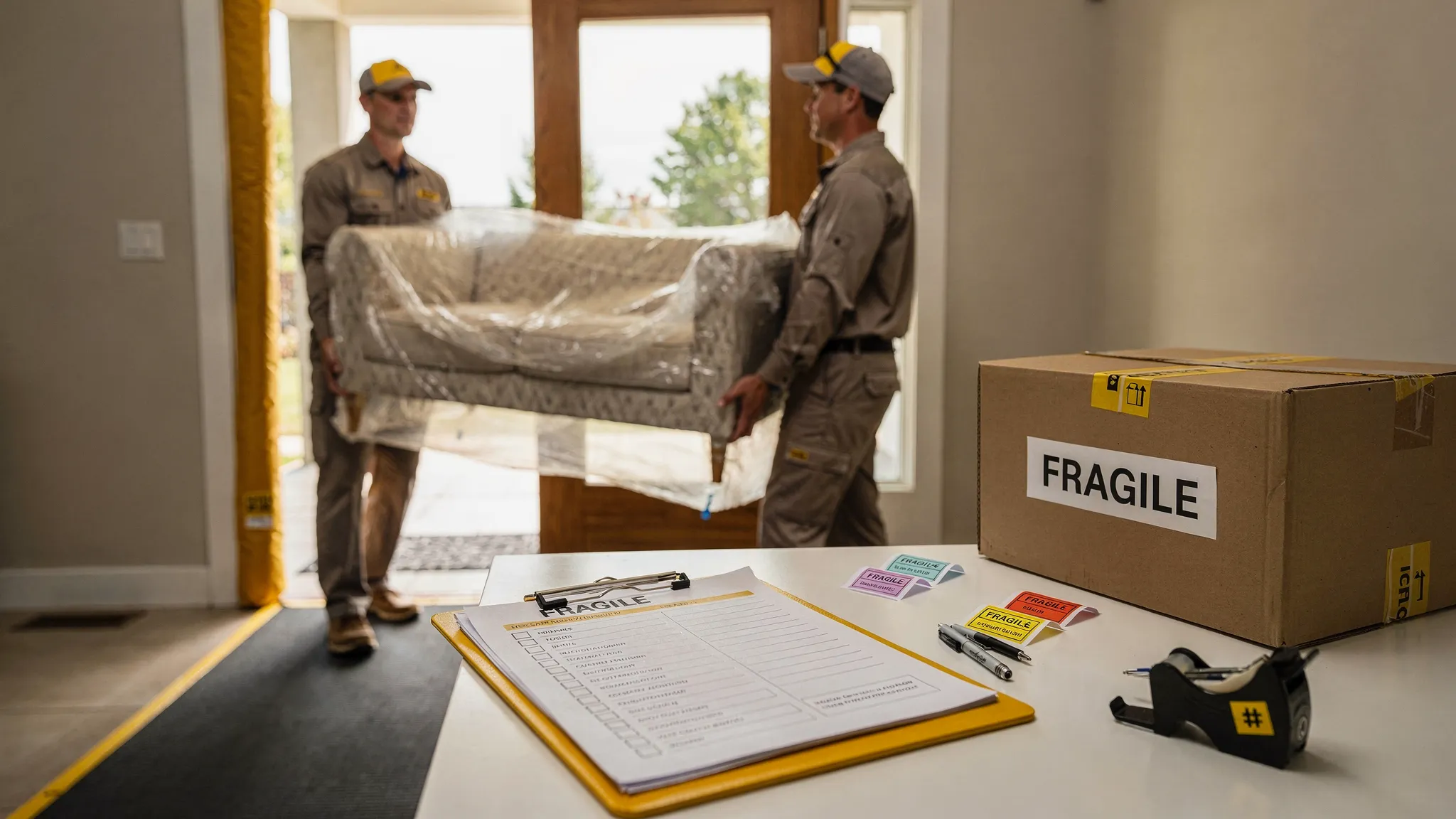
At a minimum, a full-service mover is providing a professional crew, a truck, and the equipment to safely load, transport, and unload your belongings. In practical terms, most full-service moves include:
Labor to load and unload your household goods or office items
Transportation in the mover’s truck from origin to destination
Basic protection for furniture (moving blankets, stretch wrap, tape as needed)
Standard equipment such as dollies, hand trucks, straps, and basic tools
Placement of items into the rooms you direct at the new location
Many movers also include basic furniture disassembly and reassembly (think bed frames and table legs) when needed to safely move items through doorways.
What you should take away: “Full service” generally covers the core move-day workflow, but packing, materials, and special handling are often separate line items.

These services frequently appear in full-service proposals, but may be included, partially included, or billed separately depending on the mover and the specifics of your home and access.
Packing is the biggest source of confusion. Some “full-service” moves include labor-only packing (you buy supplies), while others include materials and packing labor.
Common packing variations you’ll see on estimates:
Full packing: everything packed by the crew
Partial packing: you pack most items, movers pack fragile areas (kitchen, glassware, artwork)
Unpacking: boxes opened and contents placed into cabinets/surfaces (often limited in scope)
Boxes and supplies can be handled a few different ways:
Included as a flat package
Itemized (boxes, paper, tape, mattress bags, wardrobe boxes)
Customer-supplied (the mover provides labor only)
If you care about budget certainty, ask whether materials are capped or could increase based on what the crew uses.
A quote may assume standard access. Charges may change when there are:
Multiple flights of stairs
Tight elevators or long elevator waits
Long carry distances from door to truck (common in dense California neighborhoods)
Limited parking that requires staging or a shuttle
None of these are “gotchas” if they’re disclosed up front, but they must be discussed during the estimate so your quote reflects reality.
Many full-service movers can handle specialty items, but it’s rarely included automatically because it may require extra materials, extra crew, or special equipment.
Examples include:
Pianos
Safes
Large artwork
Oversized mirrors
Sensitive electronics
If you have anything unusually heavy, fragile, or valuable, tell the mover early and get it written into the scope.
Even the best full-service movers usually draw the line at tasks that require licensed trades, create liability issues, or fall outside standard household goods transportation.
Here are common exclusions to expect unless you specifically add them.
Movers move. They generally do not:
Deep clean your old or new home
Haul away trash or donation loads (unless they offer a separate junk-removal service)
Sort your belongings and decide what stays or goes
If you want a one-stop workflow (declutter, pack, move, clean), you’ll need either multiple vendors or a mover that explicitly offers those add-ons.
In many cases, movers can move appliances, but they may not be able to:
Disconnect or reconnect gas lines
Handle plumbing hookups
Install wall-mounted TVs
Drill into walls for shelving or anchors
Ask what they can do safely and what requires a licensed professional in your area.
Most movers will not transport items that create safety or compliance issues, such as:
Paint, solvents, fuels, propane tanks
Firearms or ammunition policies (varies by company and jurisdiction)
Certain chemicals, compressed gases, or flammables
Your mover should provide a “do not pack” list. If they do not, request one.
Many customers assume movers provide “insurance” automatically. In the US, what’s commonly included is valuation coverage, not a typical homeowners insurance policy.
For interstate moves, consumer guidance and valuation rules are regulated and explained through the Federal Motor Carrier Safety Administration (FMCSA). It’s worth reviewing the FMCSA’s mover resources, including the “Your Rights and Responsibilities When You Move” booklet, so you understand how liability and claims generally work for household goods moves.
The key point: higher-value coverage options, third-party insurance, or special declared-value handling is often an add-on.
In many California cities, the hardest part of moving is not carrying boxes, it’s securing legal parking and following building rules.
Depending on your situation, you may need:
City parking permits or temporary no-parking signs
Loading dock reservations
COI (certificate of insurance) submissions for a building
Elevator reservations and move windows
A great mover will help you plan this, but the fees themselves are usually not included unless stated.
If you’re comparing bids, it helps to classify each quote into a service level, then check what’s inside that level.
Service level | What it usually covers | Best for | Common gaps to watch |
|---|---|---|---|
Labor-only move | Crew helps load/unload your truck or container, sometimes with basic tools | Tight budgets, DIY packers | No truck, no transport, limited protection materials |
Truck + labor (standard move) | Truck, crew, loading, transport, unloading, basic furniture protection | Most local moves | Packing labor, boxes, access fees, specialty items |
Full-service move | Truck + labor plus packing (partial or full), materials, and expanded handling | Busy households, fragile-heavy homes, long-distance | Scope limits, materials caps, unpacking details, special crating |
A “moving company full service” quote should clearly state which row you’re actually buying.
Full service is often more straightforward for local moves. Long-distance moves add complexity that affects what’s “included”.
Long-distance moves may involve:
Delivery windows rather than an exact arrival time
Consolidation logistics (depending on the mover’s model)
Storage-in-transit if delivery timing changes
If your quote doesn’t explain pickup and delivery expectations in plain language, ask for clarification before you sign.
The farther your shipment goes, the more important it is to have:
A detailed written inventory
Clear notes on condition for fragile or high-value items
Written policies for claims and dispute resolution
This is another reason to work with a licensed, insured mover and insist on a transparent scope.
A professional quote is not just a total price. It’s a description of the work. When reviewing estimates, focus on whether the scope answers these questions clearly:
Packing: Is it full or partial? Are fragile-only areas included? Is unpacking included?
Materials: Are boxes and supplies included? Itemized or flat-rate? Any caps?
Access assumptions: Stairs, elevators, long carry, parking constraints
Furniture handling: Disassembly/reassembly included? Any exclusions?
Special items: Listed by name (piano, safe, artwork), not vaguely referenced
Timing: Estimated hours for local moves, delivery window expectations for long-distance
Valuation/coverage: What protection is included, and what upgrades exist?
If any of these are vague, you don’t have a full-service plan, you have a full-service guess.

Commercial relocations can be “full service,” but business moves often fail because non-moving tasks get overlooked.
Movers can typically handle:
Packing and transport of office contents
Disassembly and reassembly of standard office furniture (as agreed)
Delivery sequencing (by floor, department, or room) if planned
Your business still needs a plan for:
IT teardown and bring-up (servers, networking, device provisioning)
Security and access control (badges, keys, alarms)
Asset tracking and labeling standards
Vendor coordination and internal communications
If your relocation involves complex coordination, some companies use automation to manage inventories, task assignments, and timeline dependencies. An AI automation and integration team can help build or streamline those internal workflows so the move does not interrupt revenue-critical operations.
Full-service moving shines when the cost of your time, risk, and disruption is higher than the price difference.
Full service is often worth it when:
You’re moving long-distance and need predictable execution
You have fragile-heavy areas (kitchenware, artwork, glass, collectibles)
You’re juggling kids, pets, or demanding work schedules
Your building has strict move windows or COI requirements
You want one accountable vendor instead of coordinating labor, trucks, and supplies
You might skip full service (or choose partial packing) when:
You can pack over time and want to control materials costs
You’re moving a smaller home with minimal fragile items
You have flexible timing and help available
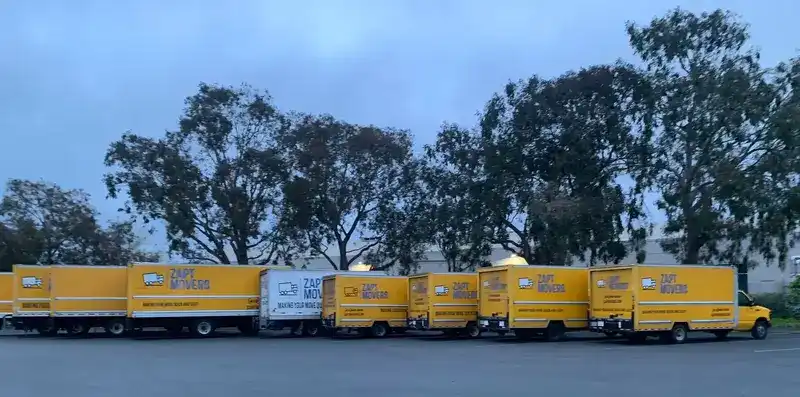
Zapt Movers provides residential and commercial moving, long-distance moves, professional packing, storage solutions, and specialty item handling, with upfront honest pricing, flexible payment options, and licensed and insured crews. If you want the benefits of a full-service move without the common uncertainty, the most important step is to request a quote that clearly documents:
The exact packing scope (full vs partial)
Materials and any limits
Access details and special items
The service timeline and delivery expectations
If you are comparing movers, treat “full service” as a starting point, then confirm the details in writing. That is how you get a move that feels truly full-service on move day, not just on the sales call.