Moving Tips
Residential Movers Near Me: A Stress-Free Hiring Checklist
Residential movers near me checklist: verify licenses, compare estimates, ask the right questions, and spot red flags for a stress-free move.

Moving Tips
Residential movers near me checklist: verify licenses, compare estimates, ask the right questions, and spot red flags for a stress-free move.
Typing “residential movers near me” usually means you are past the dreaming stage and deep into decision mode. You want a crew you can trust, a price that does not change at the last minute, and a move day that feels controlled instead of chaotic.
This checklist is built for that exact moment: a practical, stress-reducing way to compare movers, verify legitimacy, and lock in a clear plan.
Before you call anyone, take 15 to 30 minutes to define the scope. This is the single easiest way to avoid quote surprises.
Start with the basics: your move date window, current address and destination, stairs or elevator details, and whether you want packing help. Then do a fast “inventory snapshot.” You do not need to count every spoon, but you should capture big variables that change labor and truck size (beds, sectionals, large TVs, garage items, patio furniture, heavy dressers).
If you have specialty items (piano, safe, large mirror, oversized artwork), flag them now. Specialty handling is normal, but it needs to be priced and planned upfront.
A mover can look great online and still be a bad fit for your timeline, building rules, or budget. Shortlisting a few companies gives you leverage and clarity.
Use sources that give you verifiable business info (not just ads). For interstate moves, you can check a mover’s registration through the Federal Motor Carrier Safety Administration (FMCSA). FMCSA also publishes consumer guidance on avoiding fraud via Protect Your Move.
For moves within California (intrastate), moving companies are regulated by the California Public Utilities Commission. You can learn about licensing and consumer resources on the CPUC household goods carrier pages.
If you only do one thing from this article, do this step. A legitimate mover should be easy to identify and willing to share their license details.
For interstate moves, look for a USDOT number and FMCSA registration. For intrastate moves in California, look for the appropriate state authorization (often referenced as a CA permit or Cal-T for household goods carriers).
Also confirm that the company you are speaking with is the company that will show up. Some “near me” listings act like brokers or lead generators. That is not automatically wrong, but it must be disclosed, and you should know who is physically handling your home and belongings.
Use this as your fast legitimacy check while you are on the phone.
What to verify | Why it matters | What to ask for / where to check |
|---|---|---|
Company legal name + physical address | Helps confirm a real business (not a pop-up listing) | Match quote, website, invoice, and license details |
Registration for interstate moves | Required for moves across state lines | Check FMCSA guidance via [Protect Your Move](https://www.fmcsa.dot.gov/protect-your-move) |
California authorization for in-state moves | Required to operate legally within CA | Review CPUC moving company info: CPUC moving companies |
Proof of insurance and valuation options | Protects you if something goes wrong | Ask what coverage is included and what upgrades exist |
Written estimate and written terms | Reduces pricing disputes | Ask for an emailed quote with line items |
Many stressful moves start with an estimate that was not based on reality.
A quality quote should reflect your actual inventory, access conditions, and the services you want (packing, storage, disassembly, specialty items). If the mover will not ask detailed questions, that is a warning sign.
Also clarify what kind of estimate you are being offered. Moving rules and terminology can vary by move type, but the core idea is consistent: you want the assumptions written down and the price structure clearly explained.
Practical questions to ask:
Is this estimate based on an in-home walkthrough, a video walkthrough, or a few quick questions?
Is it a flat rate, an hourly rate, or a weight-based price (common for long-distance moves)?
What is included (truck, labor, basic protection, mileage, fuel, stair fees, long-carry fees, disassembly/reassembly)?
What would cause the price to change?
If you are moving out of state, FMCSA requires movers to provide consumer information and outlines key rights and responsibilities for household moves. The FMCSA consumer hub is a solid reference point: FMCSA Protect Your Move.

It is tempting to pick the lowest number. The problem is that the cheapest quote is often the least specific quote, and vague quotes are where add-on charges hide.
When comparing estimates, focus on what is included and what is excluded, not just the total. A slightly higher quote that includes packing materials, furniture protection, and a realistic labor plan may be cheaper than a low quote that later adds fees for stairs, long carries, bulky items, or packing.
If you want more context on where budgets typically get hit, Zapt Movers’ breakdown of common surprise charges is useful reading: The hidden costs of moving.
The fastest way to spot a reliable residential mover is to ask a few operational questions and listen to how they answer. Pros will be clear and specific.
Here are the best questions because they force clarity:
Who is the actual carrier doing the move, and will you subcontract any portion?
What time window do you offer for arrival, and what happens if the crew is running late?
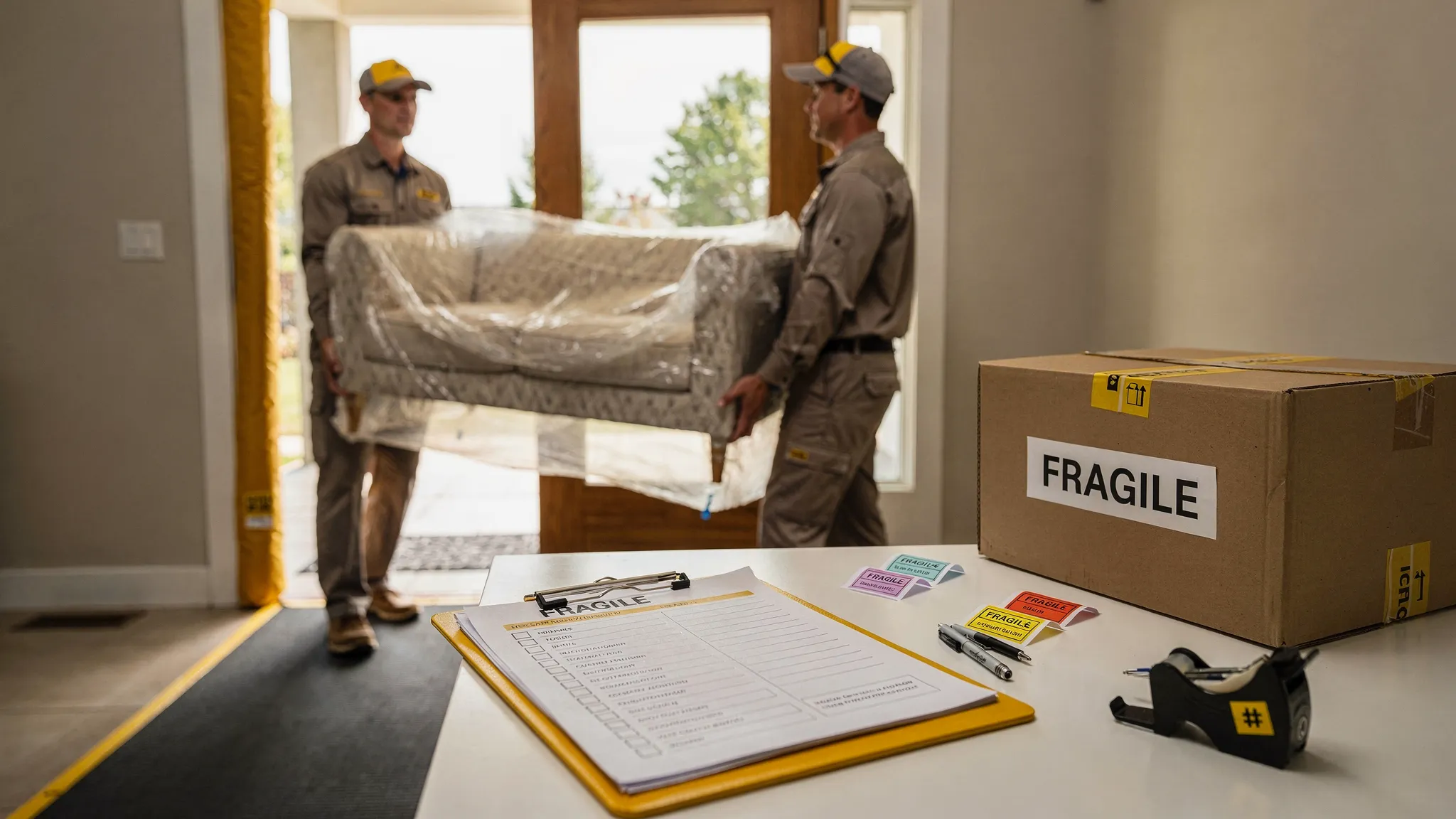
What protection do you use for floors, door frames, and railings?
How are fragile items handled, and what should you pack yourself (medications, documents, jewelry)?
What is the claims process if something is damaged?
What payment methods do you accept, and when is payment due?
Zapt Movers, for example, highlights upfront honest pricing, is licensed and insured, and offers flexible payment options along with residential moving, packing, storage, and specialty item handling. When you interview any mover, you are looking for that same level of transparency and preparedness.
Most moving scams and bad experiences have early warning signs. Treat these as reasons to pause and verify, or to walk away.
Common red flags include:
A quote given in minutes with no inventory questions
Refusal to provide written terms, licensing info, or proof of insurance
Pressure to pay a large deposit immediately (especially via cash apps or wire transfer)
A company name that changes between website, email, and invoice
No local address, or an address that is a residential home with no business presence
Vague answers about fees, arrival windows, or who will physically perform the move
If you feel rushed, slow the process down. A reputable mover would rather answer questions now than fight about expectations later.
Even with full-service movers, there are a few homeowner responsibilities that prevent delays.
Confirm building rules (COI requirements, elevator reservations, move-in windows), reserve parking if needed, and plan for kids and pets to be safely out of traffic areas. If you are packing yourself, label boxes by room and clearly mark fragile items.
If you want a broader “everything checklist” for move prep, this is a good companion piece: 10 essential tips for a smooth move.
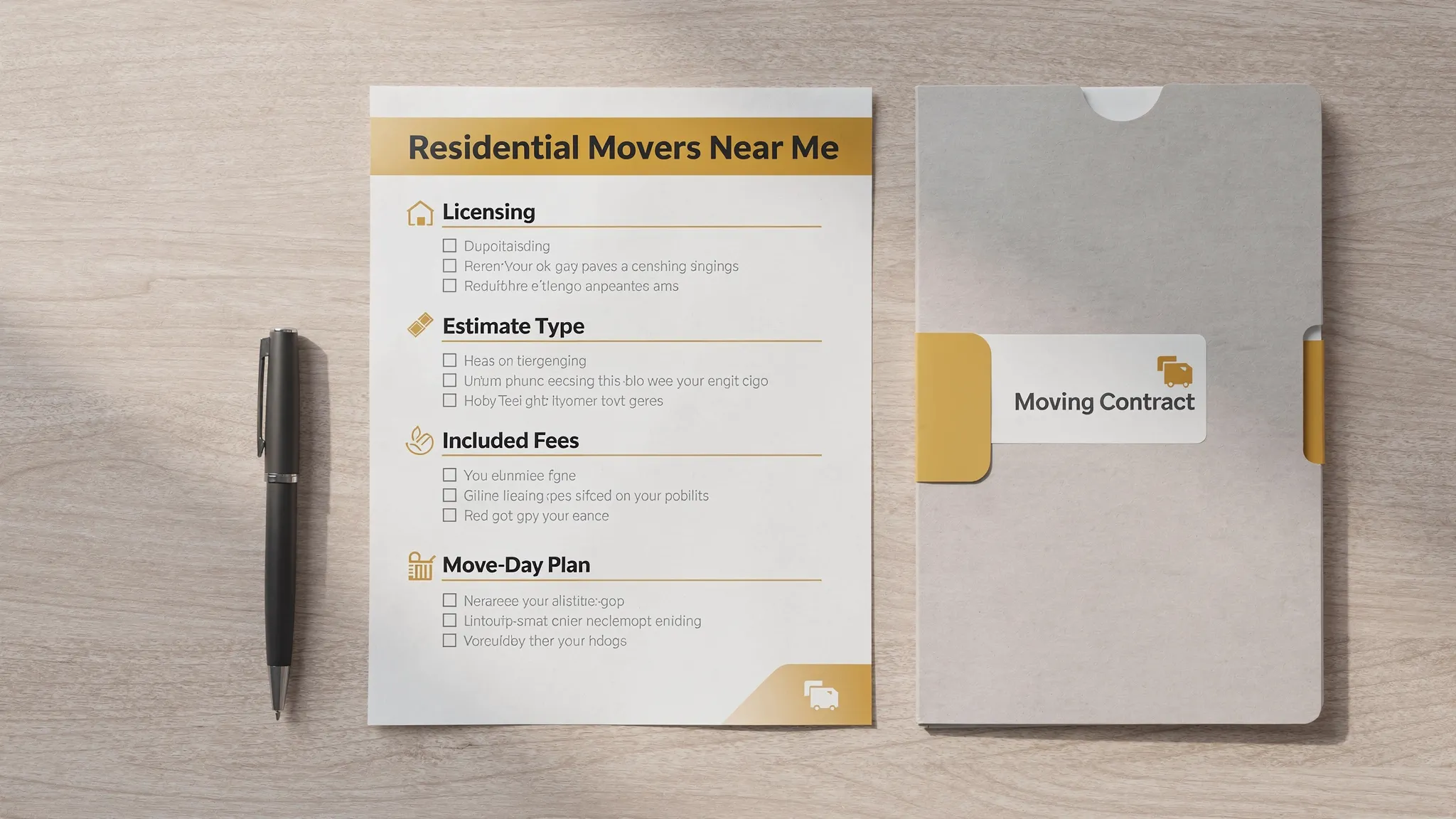
Use this as your final go/no-go check before you sign or pay anything. Keep it simple: if you cannot check most of these boxes confidently, do not book yet.
You have a written estimate with clear inclusions and exclusions.
The mover’s licensing/authorization checks out for your move type (in-state vs interstate).
You understand the pricing structure (hourly vs flat rate vs long-distance model) and what triggers changes.
Valuation/coverage options are explained in writing.
Specialty items are listed and priced.
Arrival window, minimum hours (if any), and payment timing are documented.
You know who your point of contact is on move day.
How many residential movers near me should I get quotes from? Get at least 3 quotes. It is usually enough to see the true market range and identify outliers that are suspiciously vague or unrealistically cheap.
Should I choose an hourly rate or a flat-rate estimate? It depends on your move. Hourly can work well for smaller local moves with straightforward access. Flat-rate can reduce anxiety if the scope is well-defined. The key is that the inventory and assumptions must be accurate and written.
What information should I give a mover to get an accurate quote? Provide addresses, stairs/elevators, parking/long carry details, move date window, and a realistic inventory snapshot (large furniture, garage/patio, and specialty items).
How can I tell if a mover is legitimate in California? Confirm they have the appropriate authorization for the type of move you are doing (California intrastate vs interstate). CPUC provides consumer information for in-state moves, and FMCSA resources help for interstate moves.
What should I pack myself even if I hire movers? Pack items you cannot replace or cannot afford to lose access to: medications, passports and legal documents, cash, keys, and sentimental valuables.
If you want a team that handles residential moves with clear communication and careful handling, Zapt Movers provides residential moving, packing services, storage solutions, specialty item handling, and upfront honest pricing.
Get started by requesting a free quote on the Zapt Movers website.