Long Distance Movers Reviews: How to Spot Fake Ratings
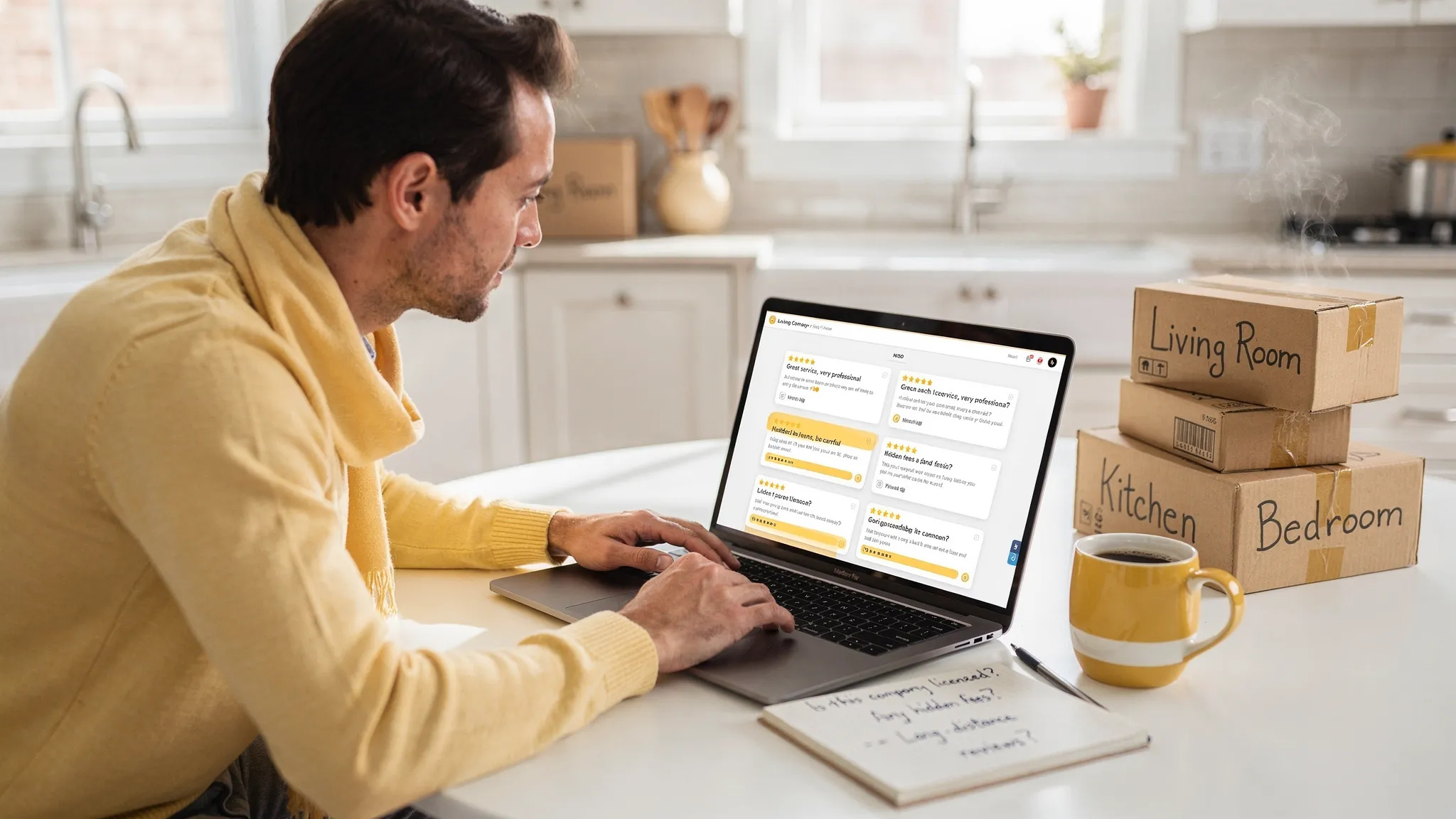
Reviews can help you avoid a bad long-distance move, but they can also be manipulated. The stakes are high (your home, your timeline, your budget), and that makes the moving industry a target for fake ratings, review gating, and “reputation cleanups.” The good news: with a few practical checks, you can separate real customer experiences from manufactured praise.
Reviews can help you avoid a bad long-distance move, but they can also be manipulated. The stakes are high (your home, your timeline, your budget), and that makes the moving industry a target for fake ratings, review gating, and “reputation cleanups.” The good news: with a few practical checks, you can separate real customer experiences from manufactured praise.
This guide focuses specifically on long distance movers reviews and how to spot fake ratings, so you can book with confidence.
Why fake ratings show up in long-distance moving
Long-distance moves create the perfect environment for review manipulation because:
Customers often book under time pressure (job relocation, lease ending, closing dates).
Pricing can vary widely based on inventory, access, and delivery windows, which makes “too good to be true” offers tempting.
Some companies rely on lead generation and sales tactics where reputation is the main conversion lever.
The Federal Trade Commission (FTC) has warned for years that fake reviews and testimonials can mislead consumers, and in 2024 it finalized a rule targeting fake reviews and related deceptive practices (including buying reviews and suppressing negative ones). You can read the FTC’s overview on its site: FTC consumer guidance on reviews.
First, don’t judge by the star rating alone
A 4.9 average looks comforting, but a single number hides important context:
How many reviews? A 4.9 from 28 reviews is less meaningful than a 4.6 from 900.
How recent? Long-distance operations change quickly (dispatch, crews, ownership, policies).
Where are the reviews posted? Some platforms are easier to game than others.
Do reviews match your move type? A company can be great at local moves and inconsistent for long-distance.
Your goal is not to find a mover with “perfect reviews.” Your goal is to find consistent, detailed, recent reviews that match your exact move.
9 signs a mover review might be fake (or heavily curated)
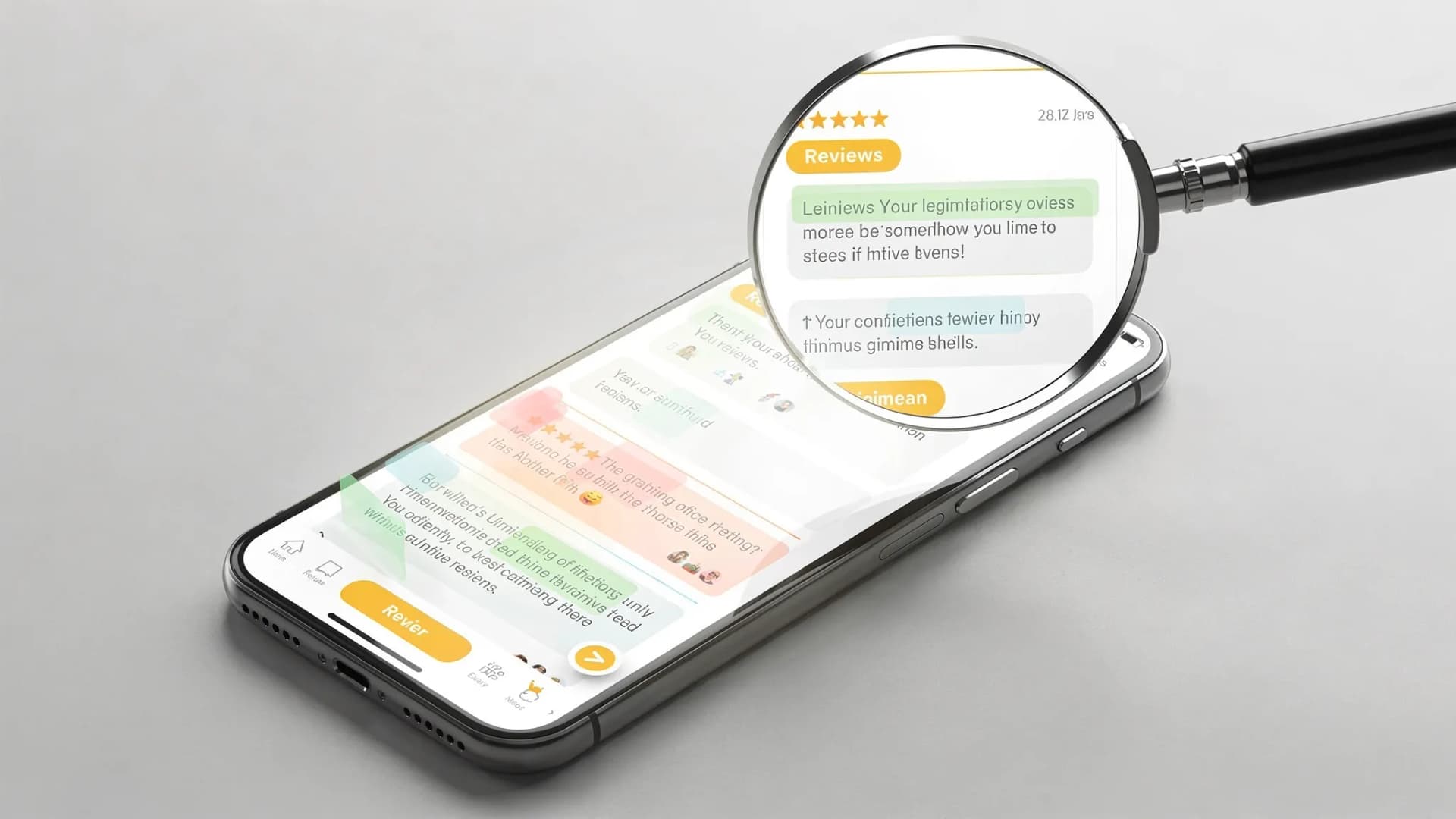
No single sign proves a review is fake. What matters is a pattern.
1) The review is vague and reads like an ad
Real moving reviews usually include specifics: origin and destination, inventory size, stairs/elevator, timing, crew behavior, and how issues were handled.
No mention of cost structure, timing, packing, or delivery.
2) Lots of reviews arrive in a sudden burst
Look at the timeline. If a company gets 30 five-star reviews within a week, then almost none for months, that can indicate a review campaign.
3) Reviewer profiles look throwaway
Be cautious when many reviews come from accounts that:
Have only 1 review total
Were created recently
Review multiple unrelated businesses with the same generic wording
4) Repeated phrases show up across multiple reviews
Copy-and-paste patterns are common. Watch for repeated employee name drops that feel scripted, or identical phrasing like “efficient, professional, and careful” across many reviews.
5) The “problem” reviews disappear, but the overall rating stays unusually high
If you see mentions like “my review was removed” or you notice older negative reviews are hard to find, the company may be pressuring customers or using reputation management tactics.
6) Reviews don’t match the company’s service area or operation
Example: dozens of reviews from people with moves in regions the mover does not realistically serve, or reviews that mention a different city or company name.
7) The review describes pricing that conflicts with how long-distance pricing works
Long-distance pricing often depends on shipment size/weight, services, and accessorials. If reviews repeatedly claim flat prices that ignore these variables (“$499 to move a 3-bedroom across states”), slow down and verify.
8) Incentives are implied (or explicitly stated)
Some businesses offer discounts, gift cards, or pressure customers to post a review before the move is complete. That creates biased ratings even when the review is technically “real.”
9) A perfect score with no meaningful criticism
Most legitimate businesses have a mix that includes:
A few 3 to 4 star reviews with nuanced feedback
Occasional complaints and (importantly) professional responses
If every review sounds euphoric and nothing ever goes wrong, that is suspicious.
Quick reference table: red flags and what to do next
Use this as a practical checklist while you read.
Review signal
Why it matters
What you should do
Very generic praise, no move details
Often indicates templated or incentivized reviews
Look for reviews that mention inventory, stairs, timing, and pricing clarity
Big spike of 5-star reviews in a short time
Can indicate a review push
Check other platforms for the same time period
Many reviewers with 1 review total
Low credibility signal
Prioritize reviews from established profiles
Same phrases repeated across reviews
Suggests copy/paste or coaching
Search within reviews for repeated wording or identical “story arcs”
Only perfect ratings, no nuance
Real operations have imperfections
Read 3-star reviews to learn the true “average” experience
Reviews mention different company names
Can indicate shared templates or brand confusion
Cross-check the legal business name and licensing
Pricing claims seem unrealistic
Classic bait-and-switch risk
Get an itemized written estimate and confirm what triggers extra charges
Reviews focus on the salesperson only
Sales experience can differ from move execution
Look for delivery and claims-handling feedback
Complaints about hostage loads, extra fees, missed windows
High-risk behavior
Avoid, and verify the carrier (not a broker) and the USDOT record
Where to check long-distance movers reviews (and what each source is good for)
A smart approach is to triangulate across multiple sources rather than trusting any single platform.
Google reviews
Good for volume and recency. Weakness: easier to manipulate at scale.
What to do: filter for “most recent,” then read a representative sample (not just the top).
Yelp
Yelp is stricter about recommendations and filtering, which can help. It also highlights review quality signals.
BBB is less about “ratings” and more about complaint patterns and business responses.
What to do: scan complaint themes (billing disputes, delays, damage claims), then evaluate how the company responds.
FMCSA (for interstate movers)
For interstate moves, the most important “review-like” data is often the company’s compliance and complaint context. The Federal Motor Carrier Safety Administration provides public company records.
What to do: confirm the mover’s USDOT number, operating status, and whether the business is authorized for interstate household goods.
A simple method to verify reviews without becoming a detective
You do not need fancy tools, just a repeatable process.
Step 1: Match reviews to your move type
Before you trust a review, ask: “Is this person describing the same kind of move I have?”
Look for details like:
Long-distance or interstate explicitly mentioned
Storage-in-transit or delivery window experiences
Packing service quality if you plan to add packing
Specialty items (pianos, fragile art, large TVs)
Step 2: Read the “middle” reviews first
Two-star and three-star reviews are often the most honest. They tend to describe what went wrong and whether the company fixed it.
A strong mover is not “never has issues.” A strong mover is “handles issues professionally and consistently.”
Step 3: Check how the company responds
Professional responses typically:
Address the specific concern
Offer a clear next step
Avoid personal attacks
Be cautious when responses are defensive, vague, or accuse customers of lying without providing any helpful resolution path.
Step 4: Cross-check names, licensing, and business identity
Fake review ecosystems thrive when consumers cannot tell who the actual carrier is.
To reduce risk:
Confirm the mover is licensed and insured.
For interstate moves, verify the USDOT record on FMCSA.
If you are moving within California, check the carrier’s authority through the California Public Utilities Commission (CPUC) household goods carrier resources.
The “too clean online” problem: review gating and selective feedback
Some businesses effectively curate their ratings by only inviting happy customers to leave public reviews, while unhappy customers are diverted to private channels.
Signs this may be happening:
Many reviews mention being “texted a review link” before delivery is complete.
Nearly all reviews are 5-star with very similar tone.
The company has surprisingly few neutral reviews.
This is why it is important to rely on more than one source and to prioritize detailed, situation-specific feedback.
What to do when you suspect fake ratings
If your gut says the online reputation does not match the risk you are taking, you have options.
Report suspicious reviews to the platform
Google, Yelp, and other platforms have reporting mechanisms for suspected fake content. Reporting does not always remove the review, but it can help reduce manipulation over time.
Ask the mover for verification details that scammers avoid
You can request:
A written estimate (not just a text message total)
Clearly stated estimate type (binding, non-binding, or not-to-exceed if offered)
Valuation coverage options in writing
A realistic delivery window for long-distance shipments
If the company avoids documentation, that is more actionable than any star rating.
Use reviews as a starting point, then validate with process
A legitimate mover should be able to explain:
How pricing is calculated
What triggers extra charges (stairs, long carries, bulky items, shuttle service)
Cost clarity (“quote matched final,” or clearly explained adjustments)
Issue handling (“one glass shelf broke, claim process took X steps”)
If you are not seeing those details anywhere, assume you are not getting the full story.
One more tip: apply the same review-reading skills to other home services
Moving is not the only industry where reviews can be noisy. If you have ever compared appliance repair companies, you have probably seen the same patterns of vague praise, sudden review spikes, and unclear pricing stories.
For an example of detailed, practical service guidance that focuses on real-world costs and repair decisions, you can browse the PHX Appliance Fix Blog appliance repair tips and price guides. The main takeaway is universal: prioritize specifics over star counts.
Frequently Asked Questions
Are long distance movers reviews reliable? Some are, but not all. Treat reviews as a screening tool, then verify licensing, written estimates, and delivery policies before booking.
What is the biggest red flag in mover reviews? Patterns that suggest bait-and-switch pricing (low quote, then large charges on moving day) and repeated complaints about delayed delivery or holding items until extra fees are paid.
Is it normal for a moving company to have a few bad reviews? Yes. What matters is whether the negative reviews describe the same unresolved problem repeatedly, and how the company responds and fixes issues.
How can I tell if reviews were incentivized? Look for mentions of discounts or being asked to leave a review before the move is completed. Also watch for unusually consistent tone and repeated phrasing.
Should I trust a mover with only Google reviews? It is better to cross-check with at least one other source and confirm the mover’s authority (FMCSA for interstate, CPUC for California intrastate) so you know who is actually responsible for your shipment.
Ready to book a long-distance move without guessing?
Reviews are useful, but the safest choice is a mover that backs up its reputation with clear documentation, transparent scope, and professional handling from pickup through delivery.
If you are planning a California move (local or long-distance) and want a straightforward, stress-reducing process with upfront honest pricing and licensed and insured service, Zapt Movers can help. Get started with a free quote.
Let’s Make Your Next Move Effortless and Worry-Free
Get a free, no-obligation moving quote in under 60 seconds. Our team is available 7 days a week to answer your questions and help you plan the perfect move. Call us, fill out our form, or book online — we’ll take it from there.
Let’s Make Your Next Move Effortless and Worry-Free
Get a free, no-obligation moving quote in under 60 seconds. Our team is available 7 days a week to answer your questions and help you plan the perfect move. Call us, fill out our form, or book online — we’ll take it from there.
Let’s Make Your Next Move Effortless and Worry-Free
Get a free, no-obligation moving quote in under 60 seconds. Our team is available 7 days a week to answer your questions and help you plan the perfect move. Call us, fill out our form, or book online — we’ll take it from there.