Moving Services Long Distance: Packing Tips That Prevent Damage
Long-distance moves are tough on belongings for one simple reason: your items spend more time in motion, get handled more times, and are exposed to more vibration, stacking pressure, and temperature swings than a local move.
Long-distance moves are tough on belongings for one simple reason: your items spend more time in motion, get handled more times, and are exposed to more vibration, stacking pressure, and temperature swings than a local move. The good news is that most “mystery damage” comes down to a few preventable packing mistakes.
Below is a practical, long-distance focused packing playbook you can use to reduce breakage, dents, and scuffs, and to make unloading and claims (if needed) far less painful.
Why long-distance moves cause more damage than local moves
Even with a careful crew, long-distance transport creates conditions that punish weak packing.
Vibration for hours or days gradually loosens loose fill, settles boxes, and turns small gaps into impact points.
Stacking pressure increases because cartons often ride in tighter loads, sometimes with re-stacks or weight shifts.
More “touch points” can happen with long-distance logistics (loading, unloading, storage-in-transit, delivery), depending on the move.
Temperature and humidity swings can affect wood, electronics, candles, toiletries, and anything packed slightly damp.
Your goal is not just “fragile protection,” it’s immobilization plus compression resistance.
Decide your packing plan first (DIY, partial, or professional)
Before you buy supplies, decide how you want packing handled. For long-distance, the right split is usually:
DIY packing for soft, non-fragile items (clothes, linens, stuffed items, some books).
Extra care packing for fragile and high-value zones (kitchen glassware, TVs, artwork, collectibles, computers).
Professional packing or specialty handling when the item is expensive to replace, difficult to pack, or emotionally irreplaceable.
One important note for interstate moves: consumer guidance from the Federal Motor Carrier Safety Administration (FMCSA) emphasizes understanding your mover’s paperwork and valuation options before moving day. Start with FMCSA’s overview of household goods consumer resources.
If you’re unsure whether to DIY or hire help, a good rule is: pack what you can confidently immobilize. If you cannot prevent an item from shifting inside its container, it is not packed for long distance yet.
Packing materials that prevent damage (and what to avoid)
Long-distance packing is where cheap supplies cost the most. Use sturdy cartons and the right cushioning so boxes can be stacked without crushing.
The “worth it” supplies list
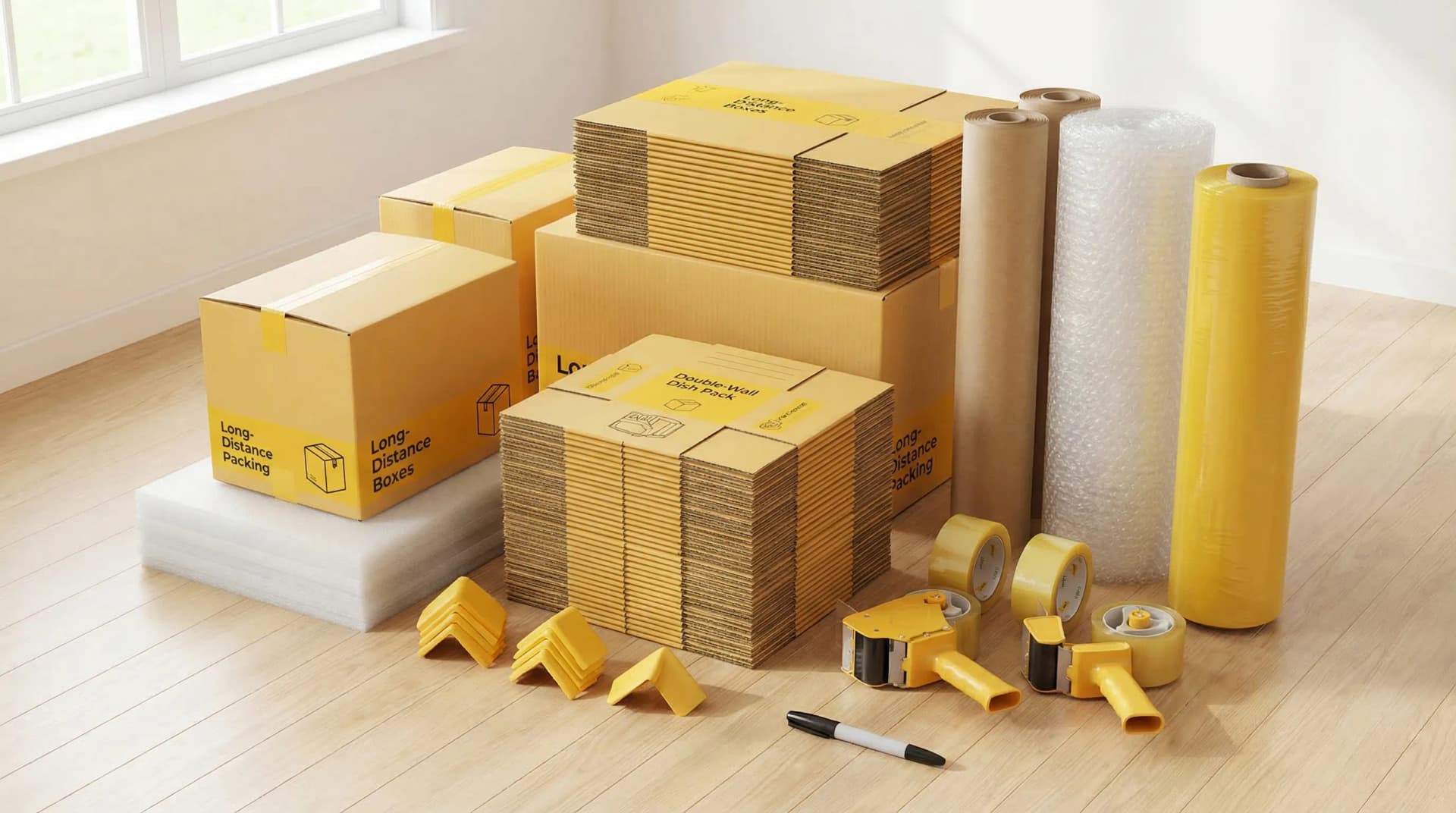
You do not need every specialty box, but these materials dramatically reduce damage:
New corrugated boxes in a few standard sizes (small, medium, large). New boxes hold shape better and stack more safely.
Dish packs (heavy-duty kitchen boxes) for plates, bowls, and glassware.
Wardrobe boxes for hanging clothes (optional, but very effective).
Packing paper (clean, unprinted) for wrap and void fill.
Bubble wrap or foam sheets for additional cushioning (use strategically, not as a substitute for proper boxing).
Strong packing tape (2 to 3 inch wide) and a tape gun.
Stretch wrap for keeping drawers closed and bundling soft items (not for cushioning fragile surfaces by itself).
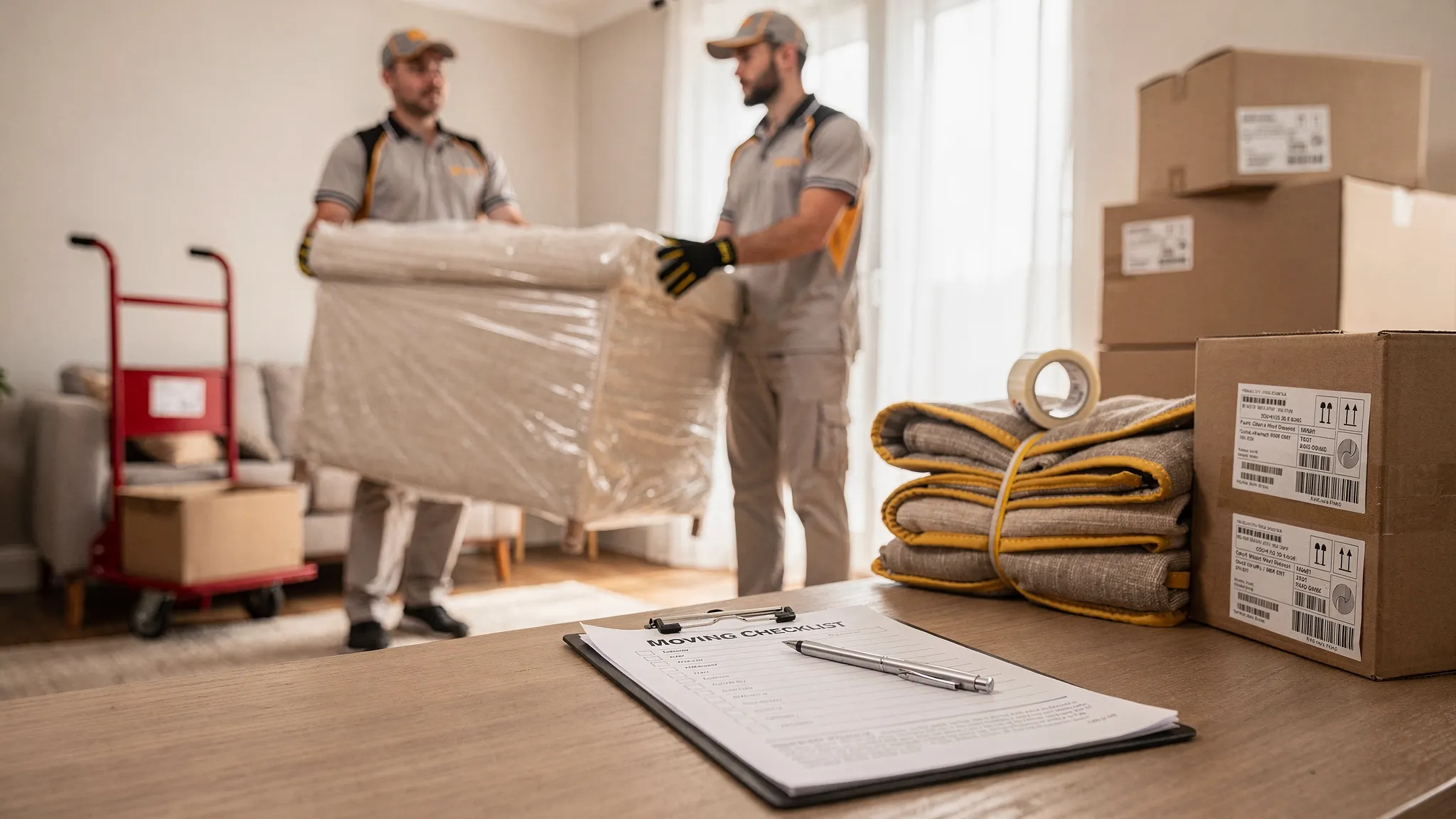
Moving blankets or furniture pads for furniture and large items.
Resealable bags for hardware (plus labels).
Materials and common mistakes (quick reference)
Material
Best use
Common mistake that causes damage
Small boxes
Books, tools, pantry items
Making them too heavy to carry, box gets dropped or the bottom fails
Dish packs
Kitchen breakables
Using regular boxes, no dividers, too much empty space
Packing paper
Wrapping and filling
Using newsprint that transfers ink, or using too little so items touch
Bubble wrap
Targeted impact protection
Wrapping once and leaving gaps so items still shift
Tape (quality)
Structural strength
One strip on the bottom instead of an H-tape seal
Stretch wrap
Bundling and dust protection
Wrapping furniture directly without a blanket, scuffs and rub marks
Blankets/pads
Furniture protection
Leaving corners exposed, most dents happen on corners
The 7 rules of long-distance packing (the stuff that actually prevents damage)
These rules matter more than any single “packing hack.”
1) Build boxes to survive stacking
Long-distance boxes should be able to handle weight above them.
Tape the bottom using the H-tape method (one strip along the seam, plus two across the edges).
For heavier cartons, add a second pass of tape.
Keep the top flat and firm when closed. If it caves in, it will crush under stacking.
2) Keep box weight predictable
Overloaded boxes are a top driver of drops, busted bottoms, and crushed contents.
Aim for “liftable without strain.” If you have to brace or swing the box, it is too heavy.
3) Immobilize contents (no shifting)
A long-distance safe box makes zero rattling sounds.
Wrap items individually.
Fill all voids so pieces cannot travel inside the carton.
Add a cushioning layer on the bottom and top.
4) Do not mix “hard” and “soft” items without a barrier
Hard items (metal, glass, ceramics) will grind into softer items over miles.
If you must combine, separate with thick paper, foam, or a padded layer.
5) Pack “vertical” for breakables when appropriate
Plates and frames often survive better on edge, similar to records in a crate, because edge orientation can handle compression differently than flat stacking.
6) Protect corners first
Corners take the first hit during loading, doorways, and tight turns.
Use corner protectors (or improvised cardboard corners) on frames, mirrors, and furniture edges, then pad over them.
7) Label for workflow, not just rooms
Room labels help, but long-distance damage prevention improves when you also label:
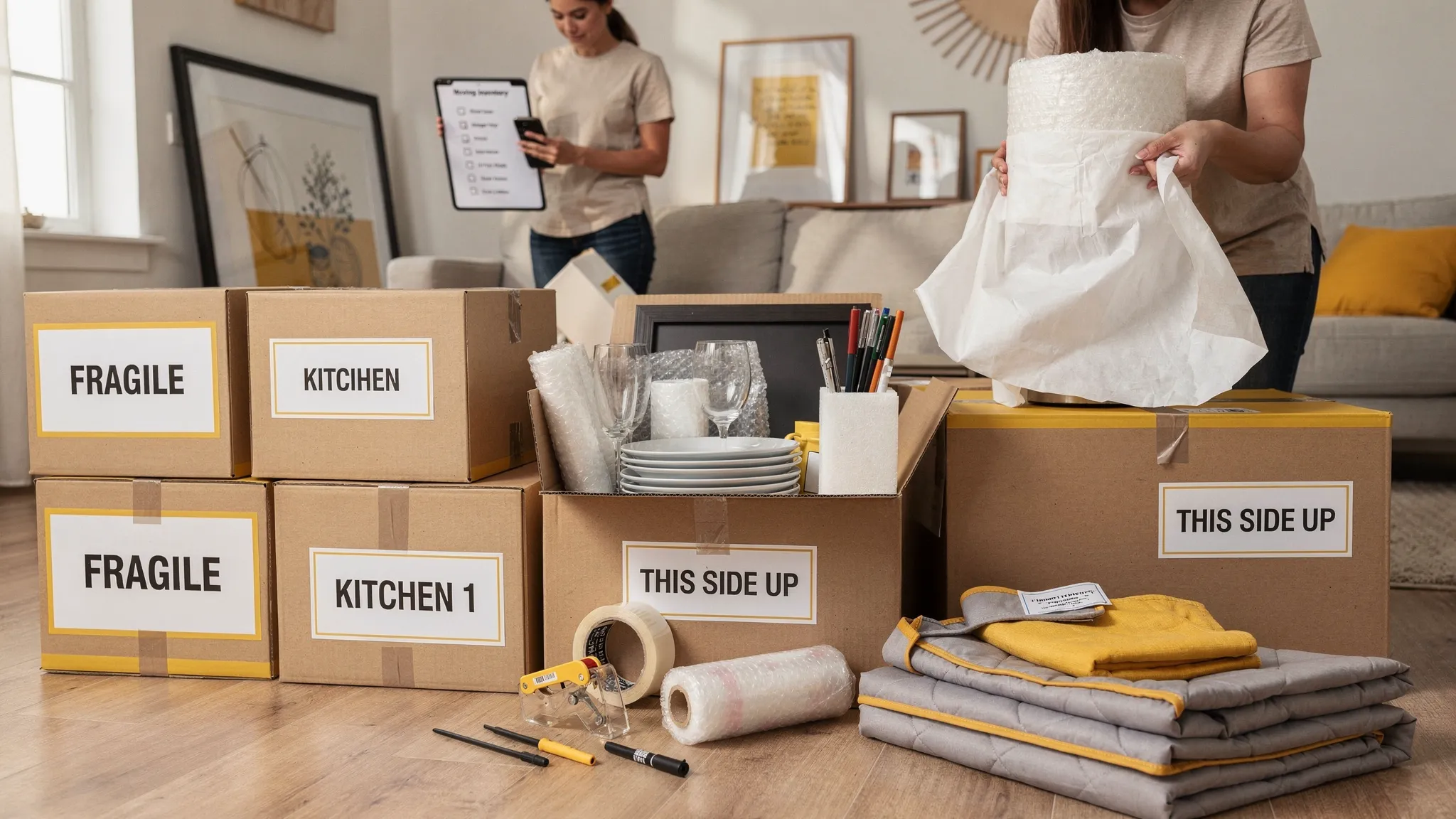
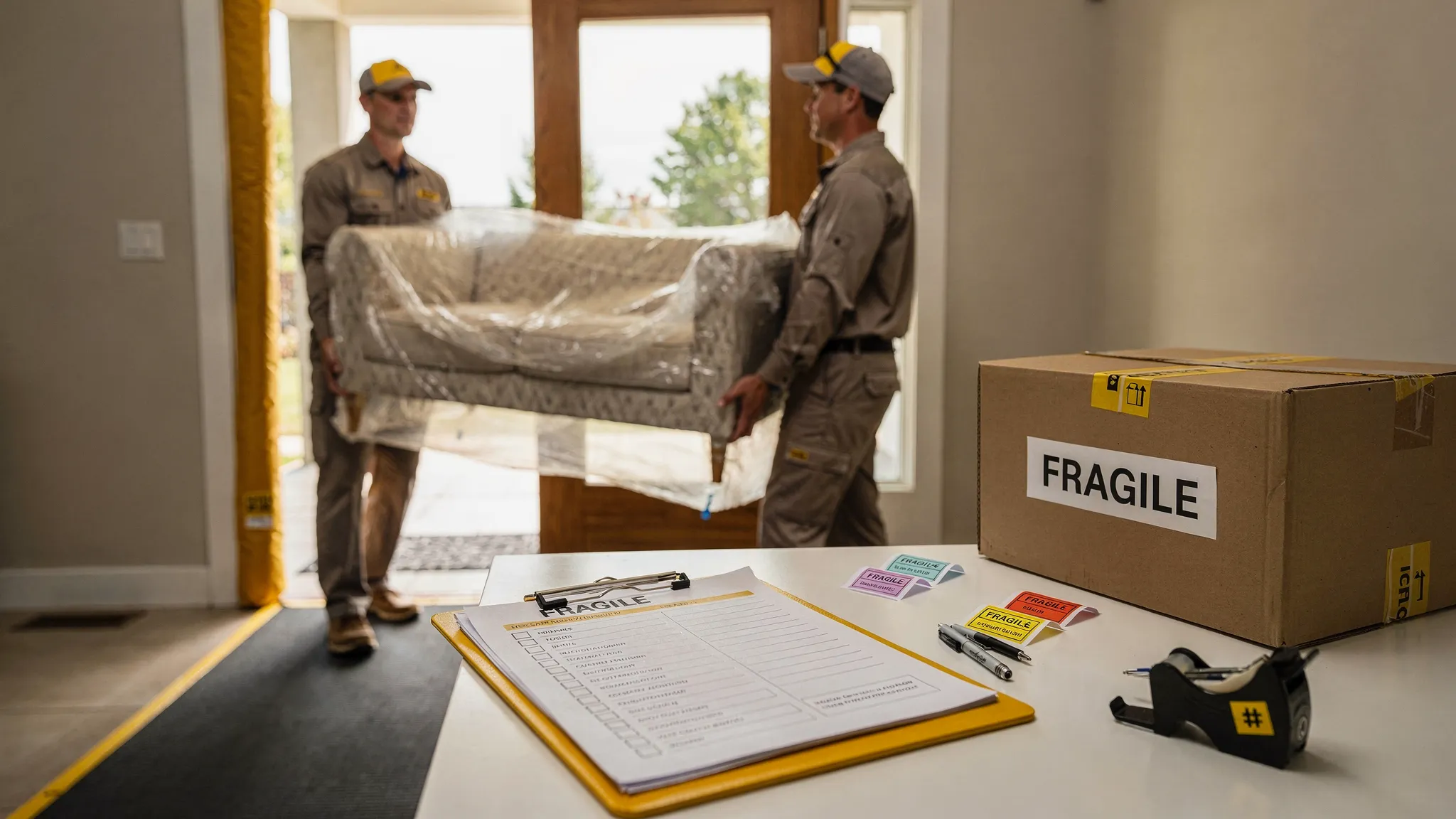
FRAGILE (only when true, overusing it makes it meaningless)
HEAVY
OPEN FIRST (for essentials)
THIS SIDE UP (helpful, even if not guaranteed)
How to pack the most damage-prone categories
This section focuses on items that commonly break in long-distance moving services.
Dishes, glasses, and ceramics
Most kitchen damage happens because items touch each other or the box walls.
Use a dish pack or a very sturdy small-to-medium box.
Wrap each piece with packing paper.
Pack plates on edge with paper between them.
Fill every gap so nothing shifts.
TVs, monitors, and computers
If you still have the original packaging, use it. If not, use a proper TV carton and padding.
Remove cables and label them.
Use foam corners or thick padding so the screen is not bearing pressure.
Avoid packing heavy items in the same box as electronics.
Artwork, mirrors, and frames
Glass plus vibration is a bad combo without corner and surface protection.
Cover the surface with clean paper (to prevent scuffs), then add bubble or foam.
Reinforce corners.
Use a mirror carton if available.
Keep frames tight so they cannot flex.
Lamps and lamp shades
Remove shades and pack them separately.
Pad bases generously and prevent movement inside the carton.
Furniture and drawers
Disassemble what should be disassembled (legs, removable shelves) so it does not rack and loosen.
Bag hardware and tape the bag to the item or place it in a labeled parts box.
Pad surfaces with blankets, then stretch wrap over the blanket to hold it in place.
Mattresses
A mattress bag is not just for cleanliness, it helps prevent tearing and moisture exposure.
Liquids, aerosols, and “garage stuff”
Many movers restrict or refuse hazardous materials, and leaks can destroy an entire box stack.
Tape lids and place liquids in sealed plastic bags inside rigid bins when possible.
Ask your mover about restricted items well before moving day.
For interstate moves, FMCSA’s “Protect Your Move” guidance is a helpful starting point for expectations and planning, including what paperwork to review and how to avoid common problems: FMCSA Protect Your Move.
A simple “damage risk” packing table
Use this as a quick audit while you pack.
Item type
Biggest damage cause on long distance
What to do differently
Glassware
Shifting and box wall impact
Wrap individually, use dish pack, zero void space
Plates
Compression and edge chipping
Pack vertically, reinforce box, pad top/bottom
TVs/monitors
Screen pressure and corner hits
TV carton, foam corners, no heavy stacking on top
Artwork/mirrors
Flexing and corner strikes
Corner protection plus rigid outer carton
Flat-pack furniture
Racking and hardware loss
Disassemble, bag hardware, pad edges
Small appliances
Internal movement and cord damage
Immobilize parts, separate cords, fill voids
Labeling and inventory that reduce loss (and make unpacking faster)
Long-distance moves are smoother when you can instantly answer: “What is this box, where does it go, and what’s inside if it’s missing?”
A practical system:
Number boxes (Kitchen 1, Kitchen 2, etc.).
Keep a simple inventory note on your phone (Box 12: coffee maker, mugs, French press).
Take quick photos of high-value items and electronics setups.
If you’re hiring a mover, you can also verify licensing for interstate moves via FMCSA resources. FMCSA’s SAFER Company Snapshot is commonly used to look up USDOT details.
Storage-in-transit and long-distance timing: pack for humidity and delays
Long-distance deliveries can involve longer timelines than local moves. To reduce moisture, odor, and mildew issues:
Do not pack damp linens, towels, or rugs.
Let refrigerators and freezers dry fully after defrosting.
Avoid sealing fragile items with “air tight” plastic if there is any chance of trapped moisture.
If you anticipate storage needs, consider using secure storage solutions through a mover so handling stays consistent from pickup to delivery.
When specialty packing or crating is the smarter choice
Some items are hard to protect with standard boxing.
Consider professional specialty handling for:
Pianos and large instruments
Marble, glass-top, or high-gloss furniture
Antiques and one-of-one pieces
Large artwork or sculptures
It is often cheaper than replacing or restoring a damaged specialty item.
A 15-minute pre-pickup packing audit (do this the night before)
Walk your packed boxes and check:
Any box that rattles needs more fill.
Any top that bows or caves needs repacking into a stronger box.
Any “misc” box with sharp mixed items needs barriers and padding.
Any box overstuffed so the flaps barely close is at risk of popping open.
This quick audit catches the same issues movers see when a box fails mid-carry.
Frequently Asked Questions
Do I need different packing for long-distance vs local moves? Yes. Long-distance packing should focus on immobilizing contents and building stack-resistant boxes because vibration and compression happen for much longer.
Is bubble wrap enough to prevent breakage? Not by itself. Bubble wrap helps with impact, but you still need rigid boxes, a padded base/top, and zero empty space so items cannot shift.
How do I pack plates so they do not crack? Wrap each plate, pack them vertically in a sturdy dish pack or small box, pad the bottom and top, and fill all gaps so nothing moves.
Should I use plastic bins instead of boxes? Plastic bins can be great for some items, but not all bins stack well under heavy weight. For long-distance loads, sturdy corrugated boxes often stack more reliably.
If I pack my own boxes, is damage still covered? It depends on the mover’s valuation coverage and the circumstances. In many situations, inadequate owner packing can complicate a damage claim. Ask your mover how valuation works and get details in writing.
What items should I not pack for movers? Many movers restrict hazardous materials like flammables, propane, some aerosols, and certain chemicals. Ask your mover for their restricted items list before moving day.
Need long-distance movers who can pack to prevent damage?
If you’re planning a long-distance move in California, the safest way to reduce damage is combining good packing with a licensed, insured moving crew that handles items carefully from start to finish.
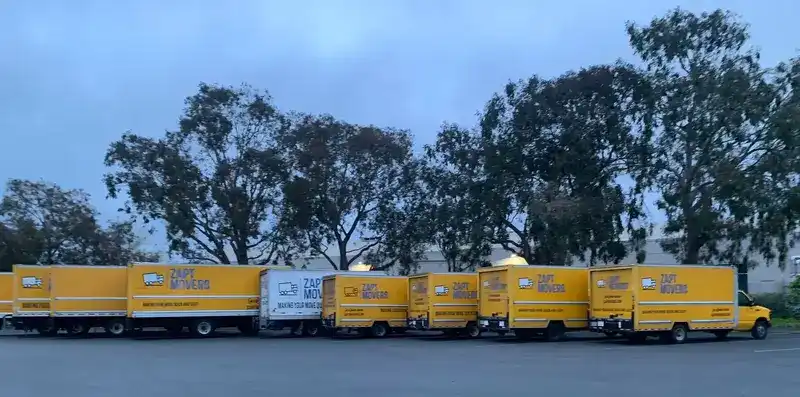
Zapt Movers provides long-distance moving services, professional packing, specialty item handling, and secure storage options, with upfront, honest pricing and flexible payment options. To discuss your timeline and packing needs, visit Zapt Movers to request a free quote. For related planning help, you can also read our guide on comparing long-distance moving quotes fast and what a full-service moving company typically includes.
Let’s Make Your Next Move Effortless and Worry-Free
Get a free, no-obligation moving quote in under 60 seconds. Our team is available 7 days a week to answer your questions and help you plan the perfect move. Call us, fill out our form, or book online — we’ll take it from there.
Let’s Make Your Next Move Effortless and Worry-Free
Get a free, no-obligation moving quote in under 60 seconds. Our team is available 7 days a week to answer your questions and help you plan the perfect move. Call us, fill out our form, or book online — we’ll take it from there.
Let’s Make Your Next Move Effortless and Worry-Free
Get a free, no-obligation moving quote in under 60 seconds. Our team is available 7 days a week to answer your questions and help you plan the perfect move. Call us, fill out our form, or book online — we’ll take it from there.