Professional Moving Services: What to Expect on Moving Day
Moving day feels high-stakes because it is the one day when your whole home becomes a logistics project. The good news is that professional moving services are designed to turn chaos into a repeatable process, with a clear sequence: confirm the plan, protect the home, load safely, transport efficiently, and deliver with documentation.
Moving day feels high-stakes because it is the one day when your whole home becomes a logistics project. The good news is that professional moving services are designed to turn chaos into a repeatable process, with a clear sequence: confirm the plan, protect the home, load safely, transport efficiently, and deliver with documentation.
Below is what you should realistically expect from a professional crew on moving day, plus how to prepare so you avoid delays, surprise charges, and last-minute scrambling.
The night before: set the crew up for a fast, safe start
Most moving-day problems start before the truck arrives. The goal the night before is to reduce decision-making and prevent “where does this go?” moments.
Make sure these are done:
Finish packing what you plan to DIY (anything left loose slows loading and can increase labor time).
Separate what is not moving (a closet, bathroom, or one room with the door closed works well).
Charge phones and pack chargers in a clearly labeled bag.
Empty and defrost the fridge/freezer if needed (follow manufacturer guidance to avoid water leaks).
Confirm building rules (elevators, COI requirements, move-in windows, quiet hours).
If you are still packing on move morning, consider shifting to a partial packing plan. Zapt Movers offers professional packing services(and many customers use it selectively for kitchens, fragile items, or time-crunch situations).
What to do before movers arrive (move morning)
On the morning of the move, your job is to make access easy and your instructions unambiguous.
Do a quick sweep focused on safety:
Clear hallways and stairs of trip hazards.
Set aside keys, gate codes, and fobs.
Reserve parking or loading space if possible.
Label rooms at the destination (a sticky note on each door is enough).
If you are in a dense area (common across many California neighborhoods), parking can make or break the schedule. If your move involves street parking restrictions or permits, handle that ahead of time so the truck can legally and safely load.
Arrival window: how a professional crew should start
A professional crew does not immediately start grabbing boxes. The start should look like a short “jobsite kickoff.” Expect:
Introductions and role clarity (who is the lead, who you communicate with).
A walkthrough of the home to confirm what is moving and what is not.
Access planning (best door to use, elevator reservations, stair strategy, parking constraints).
Confirmation of services (moving only vs packing, disassembly/reassembly, specialty items, storage).
This is also when you should bring up anything that changes the scope from the estimate, like an extra bedroom set, an added stop, or an unexpectedly long carry from the door to the truck. Scope mismatches are one of the most common ways moves run longer than expected.
Paperwork you should expect (and what it should include)
The exact documents vary by move type (local vs long-distance, intrastate vs interstate), but professional moving services should provide clear written confirmation of the job.
Common items include:
Order of service / work order describing addresses, date, and requested services
Written estimate details (rate structure, minimums if any, and what is included)
Inventory sheet (more common for long-distance or larger jobs)
For interstate moves, U.S. Department of Transportation consumer guidance and required documentation are managed under FMCSA household goods rules. You can review general consumer resources at the FMCSA Household Goods portal.
Tip: if anything important was discussed by phone or text (stairs, elevator bookings, bulky items, long carry), ask that it is reflected in writing before loading begins.
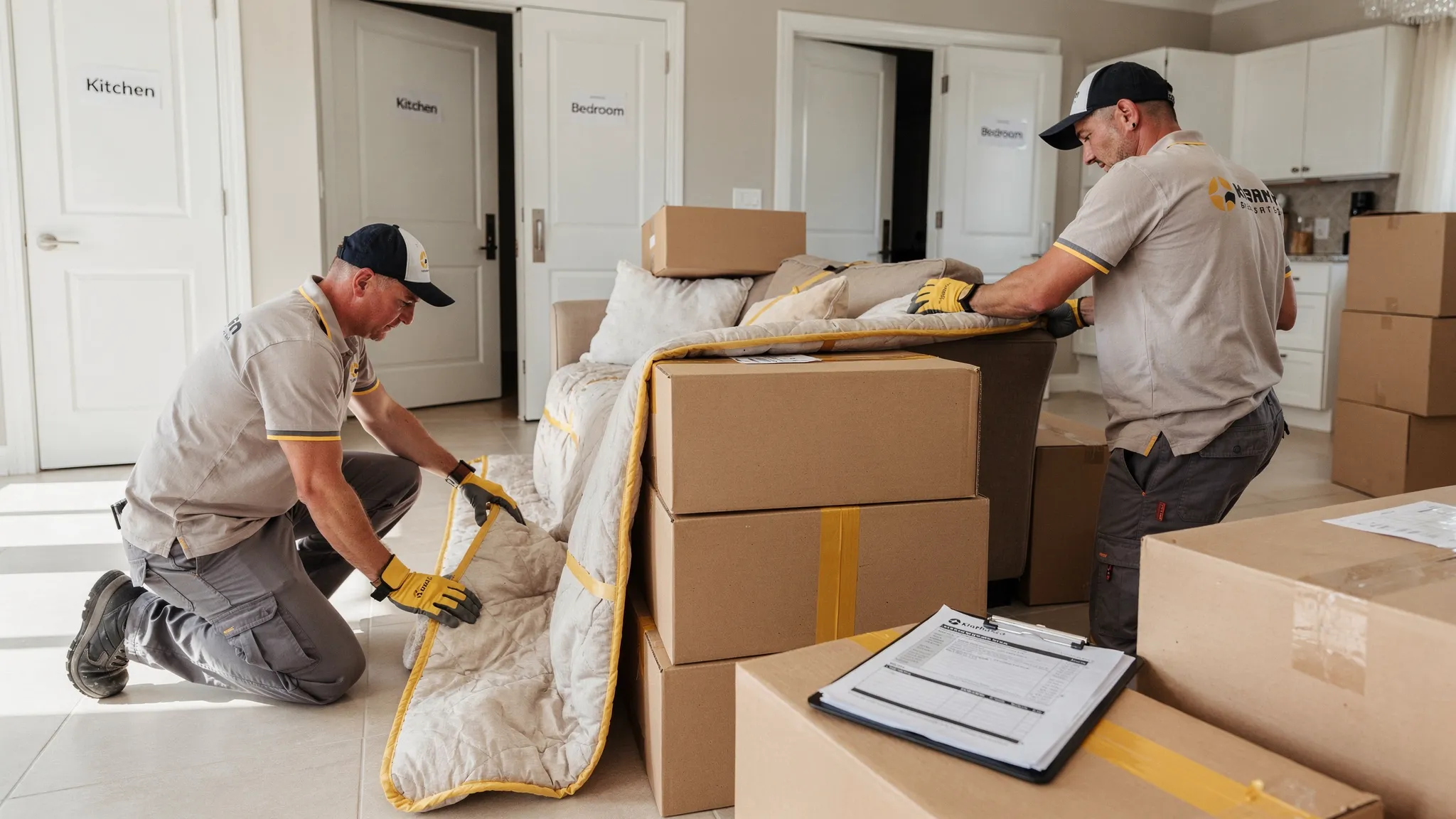
Home protection: floors, walls, and “high-scratch zones”
A professional crew should proactively protect both the home you are leaving and the home you are entering.
What this often includes:
Floor protection in main paths (especially hardwood, tile, and high-traffic carpet)
Door jamb and corner awareness (tight turns are where dents happen)
Furniture padding/wrapping and securement for transport
Not every move uses identical materials or methods, but the standard should be the same: prevent damage rather than react to it.
Packing on moving day: what’s realistic and what slows everything down
Some moves include packing on the same day, either full packing or “finish packing.” If packing is happening on moving day, expect the crew lead to:
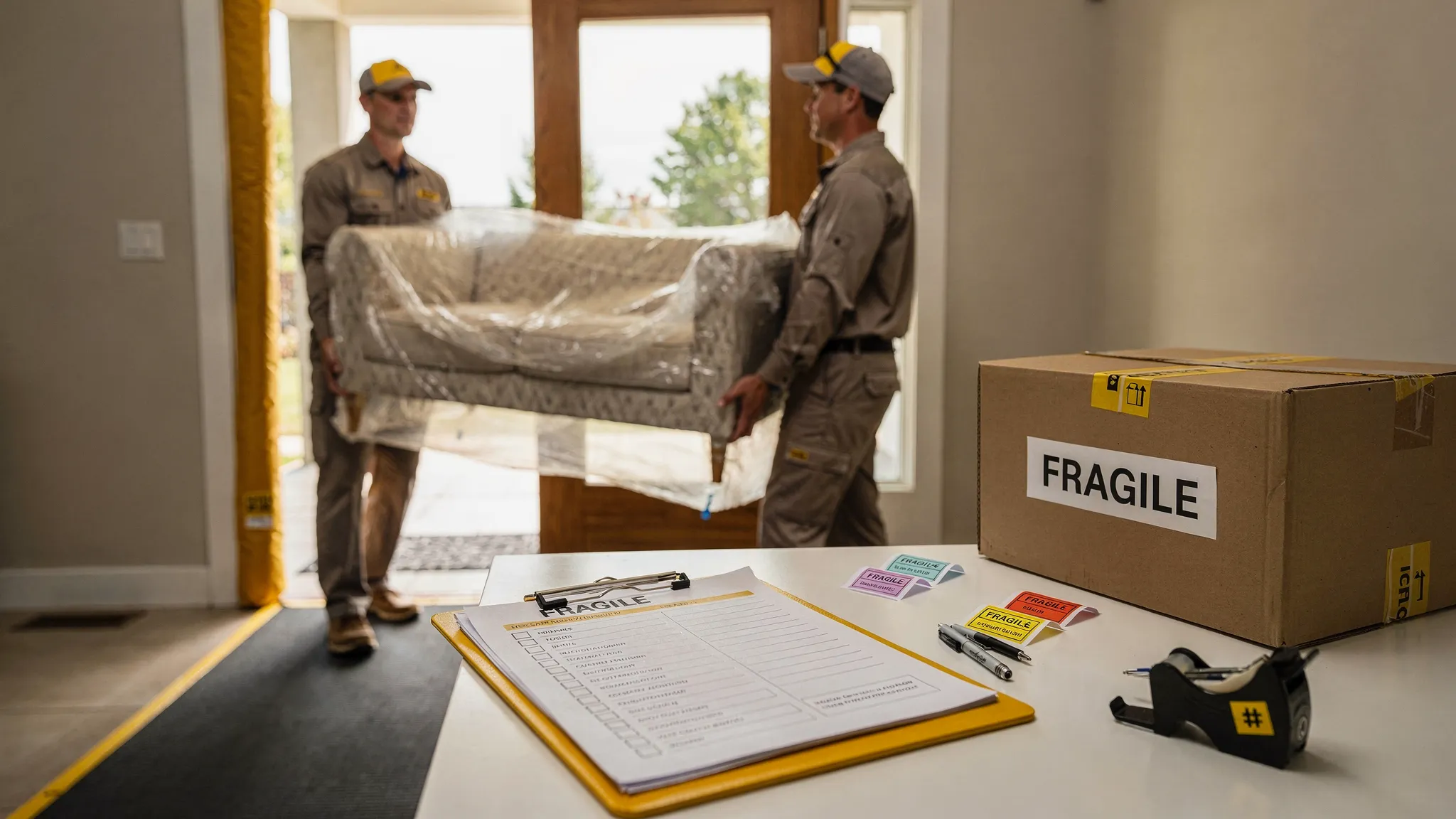
Identify fragile zones (kitchen, glass, art)
Confirm what should not be packed (documents, valuables, medications)
Create a plan so packing and loading can happen in parallel
If you are DIY packing, there is one rule that matters most: everything should be boxed, sealed, and lift-ready. Loose items, open-top bins, and unlabeled bags slow the crew and increase the chance of loss.
Loading: the process should be systematic (not random)
Loading is where professionals create efficiency and reduce damage risk. A good crew loads like they are building a stable structure, not just filling space.
You should expect:
Heavy items first (appliances, dressers, solid furniture)
Mattresses and upholstered pieces protected
Fragiles separated from heavy shifting items
Hardware control for disassembly (screws and brackets kept together)
If you have specialty items (large mirrors, artwork, a safe, antique furniture), mention them again during the walkthrough even if they were included in the quote. Specialty handling often requires extra labor, extra materials, or a specific carry plan.
A clear division of responsibilities
The fastest moving days happen when everyone knows their lane.
Here is a simple view of what is typically on you vs on the moving company:
Final walkthrough, documentation, next-step guidance
This division matters because many delays come from “decision bottlenecks,” like a customer being unavailable during key questions about what stays, what goes, or where items belong.
During transit: what communication should look like
For local moves, transit is often simple: you might drive separately and meet the truck.
For long-distance moving, the important expectations are:
Clear delivery window communication
A plan for contact and updates
Documentation for any interim storage if applicable
Unloading: room placement is where you win back hours
At the destination, the most helpful thing you can do is make placement easy.
Before unloading begins:
Put a label on each room (Kitchen, Primary Bedroom, Office).
Decide where the largest pieces go (bed frame wall, couch wall, dining table orientation).
Keep one “Do Not Block” area for essentials and access (bathroom, entry, hallway).
A professional crew should confirm placement preferences early, then unload in a way that avoids re-handling heavy items.
Final walkthrough: the right time to check for missing pieces
Before the crew leaves, expect a short final walkthrough.
This is your moment to:
Confirm all rooms, closets, garage, and outdoor areas are empty.
Check that disassembled items that should be reassembled (as agreed) are completed.
Look for obvious damage to walls, floors, and large furniture pieces.
If something is off, document it right away. Take photos and note it on any relevant paperwork.
Payment, tipping, and receipts: what’s normal
Payment practices vary by company and move type, but professional moving services should be transparent about:
When payment is due
What payment methods are accepted
What triggers add-on charges (extra stairs, long carry, packing materials, extra stops)
Zapt Movers emphasizes upfront honest pricing and flexible payment options (per their service overview), so you should feel comfortable asking for confirmation of totals and any changes before the job is complete.
Tipping is optional and personal. If you tip, do it based on professionalism, care, and efficiency.
If something goes wrong: how professionals handle it
Even with a great crew, real life happens: elevators break, parking enforcement appears, a couch does not fit, traffic spikes.
The difference with a professional mover is how issues are communicated and documented. Expect the crew lead to:
Explain the problem and the options (not just announce a delay)
Adjust the plan (different door, partial disassembly, different load order)
Document any scope changes that affect time or cost
If an item is damaged, ask about the company’s claims/valuation process and what evidence they need. In general, the most helpful things you can provide are photos, item description, and when you noticed the damage.
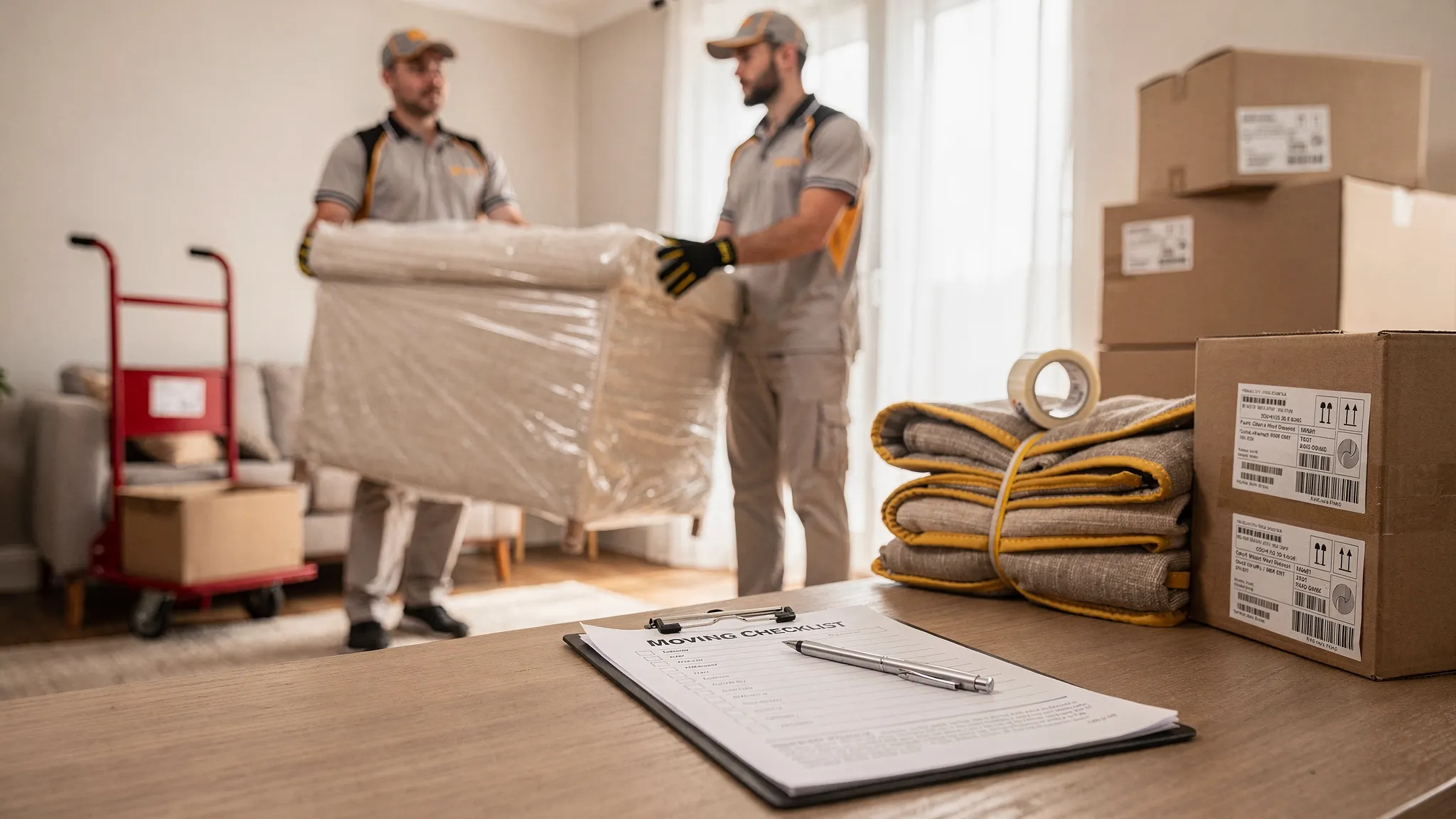
A quick professionalism checklist you can use in real time
If you want a fast gut-check while the crew is working, look for these signals:
The crew lead communicates clearly and answers questions directly.
Floors and tight corners are protected in main pathways.
Furniture is wrapped/protected before it goes onto the truck.
The truck is loaded with stability in mind, not just “whatever fits next.”
Any changes in scope are discussed before they become surprises.
If you are still in the hiring phase, Zapt Movers’ guide to finding reliable movers near you pairs well with this moving-day walkthrough.
When you want the day to feel simple, choose a mover built for process
Moving day is not just labor, it is coordination, protection, and documentation. The more your mover relies on a repeatable process, the less your move relies on luck.
If you are planning a local, long-distance, residential, or commercial relocation in California, Zapt Movers offers licensed and insured professional moving services, plus packing, specialty handling, and storage. You can start with a no-pressure estimate at Zapt Movers.
Let’s Make Your Next Move Effortless and Worry-Free
Get a free, no-obligation moving quote in under 60 seconds. Our team is available 7 days a week to answer your questions and help you plan the perfect move. Call us, fill out our form, or book online — we’ll take it from there.
Let’s Make Your Next Move Effortless and Worry-Free
Get a free, no-obligation moving quote in under 60 seconds. Our team is available 7 days a week to answer your questions and help you plan the perfect move. Call us, fill out our form, or book online — we’ll take it from there.
Let’s Make Your Next Move Effortless and Worry-Free
Get a free, no-obligation moving quote in under 60 seconds. Our team is available 7 days a week to answer your questions and help you plan the perfect move. Call us, fill out our form, or book online — we’ll take it from there.