A long-distance move can feel like dozens of small projects happening at once: hiring the right crew, building a realistic inventory, protecting valuables, timing utilities, and making sure your stuff arrives when you do.
A long-distance move can feel like dozens of small projects happening at once: hiring the right crew, building a realistic inventory, protecting valuables, timing utilities, and making sure your stuff arrives when you do. The difference between a smooth relocation and a stressful one usually comes down to one thing: prep, early and documented.
This checklist is built for people actively planning a move and searching for long distance movers. Use it as a timeline and a scope-control tool, so you avoid surprise fees, last-minute scrambling, and delivery-day confusion.
Long-distance prep is different (and why the checklist matters)
Local moves are often forgiving. If you forget something, you can drive back. Long-distance moves add constraints that make preparation more “systems-based”:
Delivery windows and transit time matter more.
Your quote accuracy depends heavily on inventory accuracy.
Storage-in-transit may come into play if closing dates do not align.
Valuation (declared value and coverage options) becomes a bigger decision.
Scams and broker issues are more common on interstate routes.
Decide your service level (DIY packing vs professional packing)
Long-distance moves amplify packing mistakes because boxes are handled more, stacked for longer, and may be reconfigured during transit. If you are unsure whether to pack yourself, read Moving Company Full Service: What’s Included and What’s Not to understand what is typically included versus optional.
Start the declutter “hard stop”
Every item you move costs money or time, often both. Set a deadline for decisions.
Sell or donate bulky low-value items early (bookcases, spare furniture, old gym gear).
Recycle hazardous or restricted items properly (paint, solvents, propane).
Avoid “maybe boxes.” Decide keep, donate, sell, or discard.
6 to 4 weeks out: book the right mover, and document the scope
This is where you protect yourself from pricing surprises and operational surprises.
Verify licensing (interstate vs in-state)
If your move crosses state lines, your mover should be registered with the Federal Motor Carrier Safety Administration (FMCSA). Consumers can verify movers and learn their rights through the FMCSA’s Protect Your Move resources.
If your move is within California but still long distance, separate state rules may apply (California regulates household goods carriers). Regardless, the principle is the same: verify the company is properly licensed and insured for your move type.
Confirm you’re hiring the carrier (not a broker)
Brokers can be legitimate, but many move nightmares start when the company you booked is not the company that shows up. Your paperwork should clearly identify who is physically transporting your shipment.
Get a written estimate that matches your actual needs
A quote is only as good as what it includes. Make sure every accessorial is listed (stairs, long carry, packing, bulky items, shuttles if needed, storage-in-transit if needed).
Here’s a simple “quote completeness” table you can use during calls:
Quote item to confirm
Why it matters for long-distance
What to ask
Estimate type and assumptions
Controls how changes affect price
“Is this estimate binding or non-binding, and what can change it?”
Packing scope
Packing is a major cost driver
“Which rooms are included, and are materials included?”
Access details
Access fees are common surprises
“What triggers stair, elevator, long-carry, or shuttle charges?”
Delivery window
Impacts time off work and lodging
“What is the delivery spread, and how is it confirmed?”
Valuation options
Affects risk management
“What coverage is included, and what are the upgrade options?”
For interstate moves, the FMCSA also publishes consumer guidance on required documents and protections, including the “Rights and Responsibilities When You Move” booklet and key paperwork expectations. Start at Consumer protection regulations and read what applies to your situation.
4 to 2 weeks out: packing systems, logistics, and address changes
Once the mover is booked, your goal is to make the move “boringly repeatable.” That comes from systems.
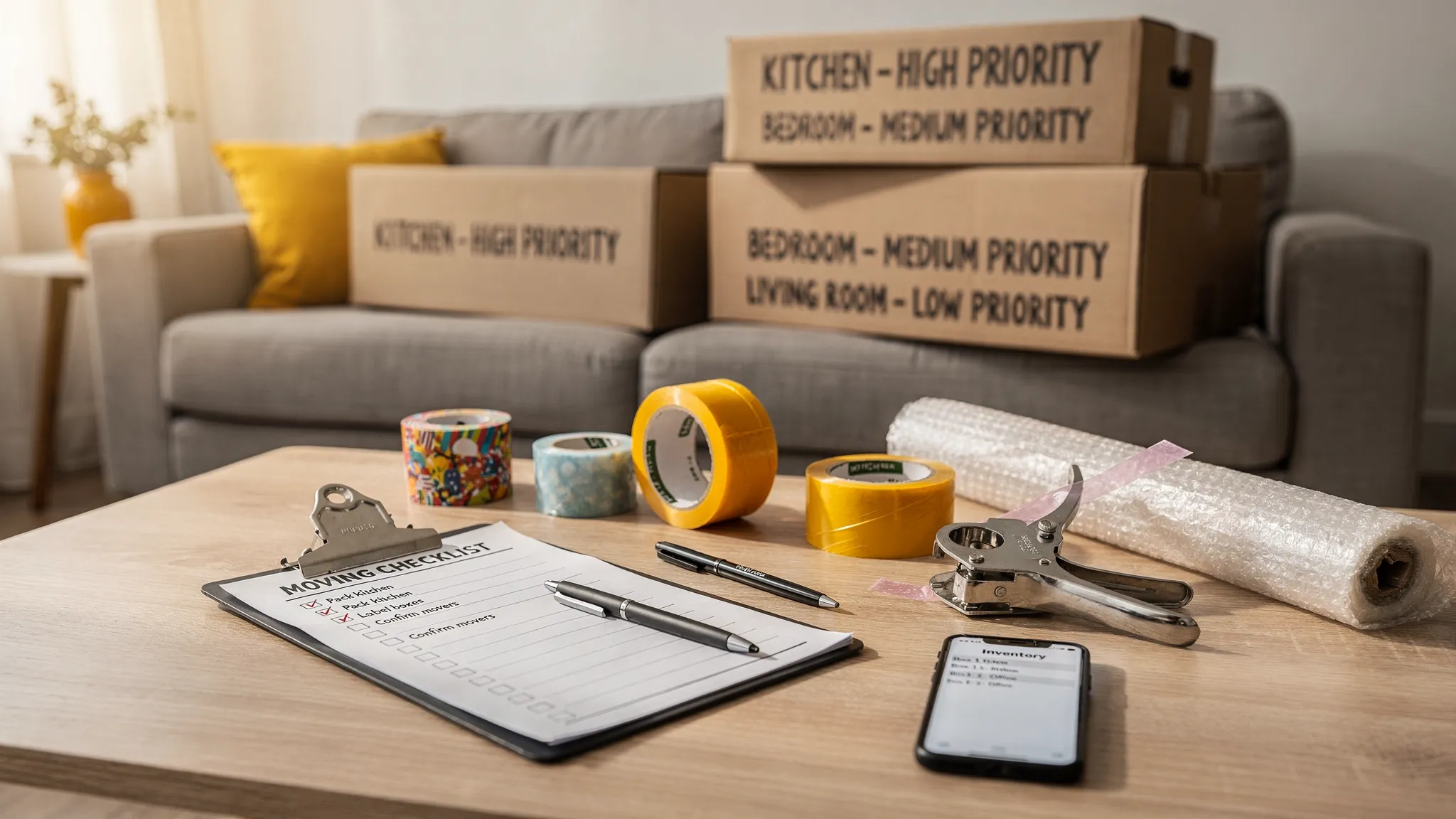
Set up a labeling and tracking system that survives a long haul
Do not rely on vague labels like “misc.” Long-distance unpacking goes faster when each box has both a destination and a priority.
A simple approach:
Room name + sub-area (example: “Kitchen, pantry”).
Priority mark (Open First, Week 1, Storage).
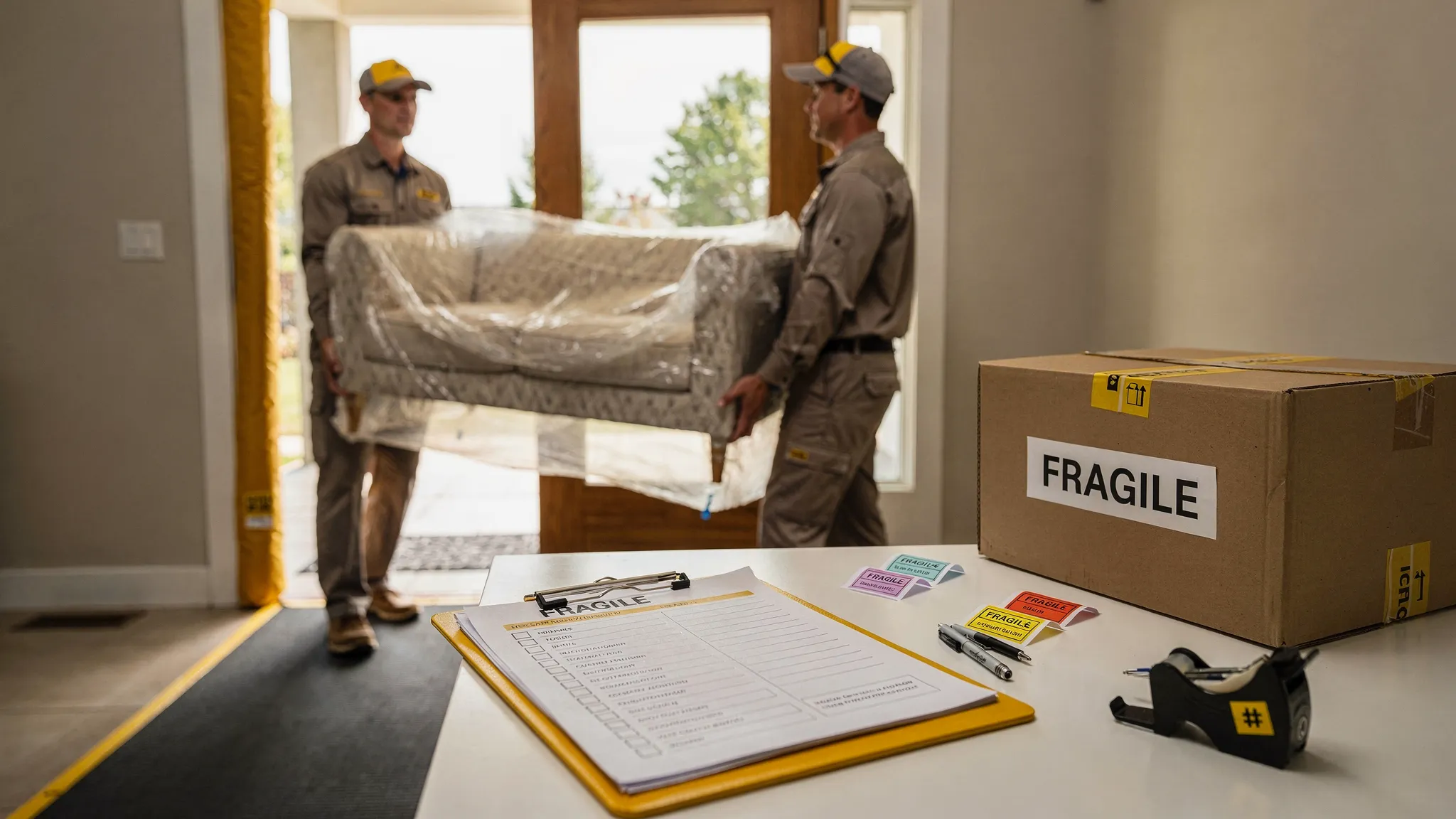
Fragile mark only when it changes how the box must be handled.
Electronics (front and back, showing existing scratches).
TV screens (powered off, close-up).
Furniture surfaces (especially corners).
High-value items.
This is not about expecting problems, it is about removing ambiguity if a claim is needed.
Decide what gets disassembled (and how hardware is stored)
Disassembly is common for bed frames, some tables, and large sectionals. Use a consistent hardware method.
Bag hardware per item.
Label the bag with the item name.
Tape the bag to the item when possible, or store in a dedicated “hardware bin.”
Final 72 hours: confirmation and the essentials kit
Confirm schedule and contacts
Have a single note (paper or digital) with:
Driver or coordinator contact (if provided).
Pickup address, delivery address, gate codes.
Your best phone number on move day.
Any time restrictions (building hours, HOA rules).
Pack a real “arrival kit” (not just a random essentials box)
Long-distance delivery timing can shift. Pack to be comfortable even if the truck arrives later than expected.
3 to 5 days of clothing.
Toiletries and towels.
Chargers, power strip.
Basic tools (box cutter, screwdriver).
Paper towels, trash bags.
Snacks and a few simple kitchen items.
Clean and stage for loading
The easiest way to speed up loading is to stage boxes and keep pathways clear.
Clear hallways and stairs.
Remove rugs that can slide.
Protect floors if you are responsible for it (especially in rentals).
Move day: how to stay in control without micromanaging
Do a walk-through before anything is loaded
Confirm what is going and what is not.
Point out fragile items and items that need special handling.
Identify bathrooms that should remain accessible.
Track inventory as it leaves
Most professional crews use an inventory process for long-distance. Pay attention to how items are recorded, and keep your own quick reference for high-value pieces.
Keep paperwork together
For interstate moves, you will typically encounter documents like the order for service, bill of lading, and inventory. Read before signing, and keep copies accessible.
If anything on-site differs from the written scope (extra packing, unexpected shuttle, major access change), pause and get it documented.
Delivery day: inspection, notes, and smart unpacking
Before the crew leaves, check big-ticket items first
Unpack priority is not the kitchen. It is items that are expensive, fragile, or critical.
TVs and monitors.
Beds and key furniture.
Appliances for damage.
Boxes marked Open First.
If damage is noticed, note it immediately according to the mover’s process. Document with photos.
Unpack in phases to avoid chaos
A long-distance unpack can drag on because everything feels urgent. Use a simple phase approach:
Phase 1: beds, bathroom, basic kitchen function.
Phase 2: work setup and daily routines.
Phase 3: décor, storage, non-essentials.
When it makes sense to use packing and storage (and why it can save money)
People assume add-on services always increase cost. Sometimes they reduce total cost by shrinking risk and time:
Professional packing can prevent breakage and speed up loading, especially for kitchens and fragile collections.
Storage helps when leases and closings do not align, or when you want to stage a home.
Zapt Movers offers long-distance moving, professional packing, specialty item handling, and secure storage solutions. If you want to reduce stress and keep pricing straightforward, start by requesting a clear written scope and timeline.
You can also use Zapt Movers’ resources to prep for the buying decision:
When you are ready to talk through your route, packing needs, and schedule, visit Zapt Movers to start planning your move with a licensed, insured team and upfront, honest pricing.
Let’s Make Your Next Move Effortless and Worry-Free
Get a free, no-obligation moving quote in under 60 seconds. Our team is available 7 days a week to answer your questions and help you plan the perfect move. Call us, fill out our form, or book online — we’ll take it from there.
Let’s Make Your Next Move Effortless and Worry-Free
Get a free, no-obligation moving quote in under 60 seconds. Our team is available 7 days a week to answer your questions and help you plan the perfect move. Call us, fill out our form, or book online — we’ll take it from there.
Let’s Make Your Next Move Effortless and Worry-Free
Get a free, no-obligation moving quote in under 60 seconds. Our team is available 7 days a week to answer your questions and help you plan the perfect move. Call us, fill out our form, or book online — we’ll take it from there.