Moving Relocation Services: Timeline for a Smooth Move
Moving goes smoother when it stops being a single overwhelming “move day” and becomes a series of small, scheduled decisions. A clear timeline helps you lock in the right moving relocation services early, prevent surprise fees, and avoid the last-weekend scramble that breaks boxes, budgets, and nerves.
Moving goes smoother when it stops being a single overwhelming “move day” and becomes a series of small, scheduled decisions. A clear timeline helps you lock in the right moving relocation services early, prevent surprise fees, and avoid the last-weekend scramble that breaks boxes, budgets, and nerves.
Below is a practical, realistic move timeline you can follow whether you’re moving locally in California, relocating long-distance, or coordinating packing, storage, and specialty items.
How to use this timeline (so it actually reduces stress)
Before you jump into the checklist, make three quick choices:
Your move type: local, long-distance, residential, or commercial.
Your service level: labor-only, full-service moving, or moving plus packing (and possibly storage).
Your “non-negotiables”: move-out/move-in windows, elevator reservations, parking constraints, fragile items, or a strict delivery date.
Once those are clear, the timeline below becomes your default plan, and you can adjust it based on how much you’re moving and how tight your schedule is.
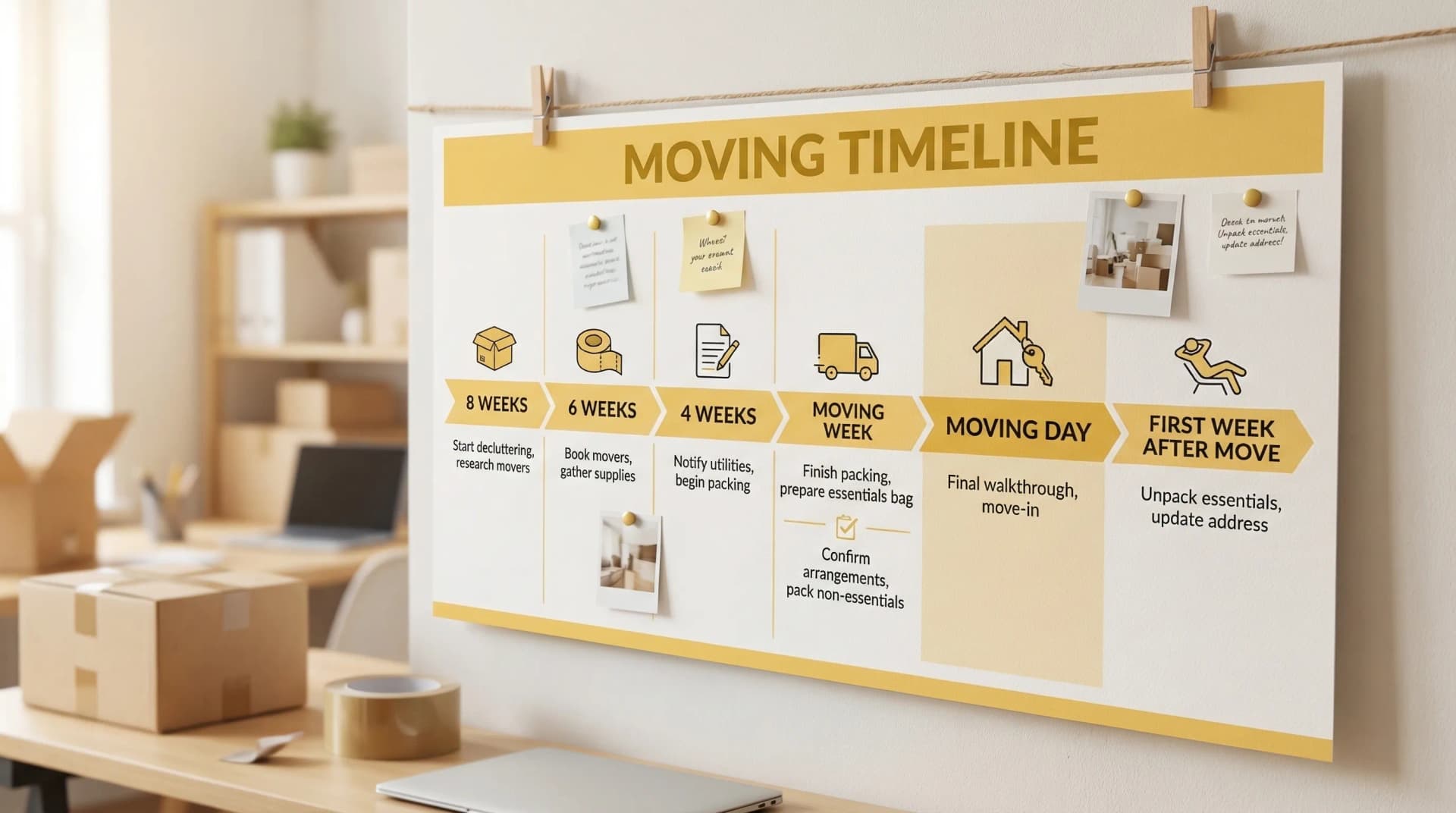
Moving relocation services timeline at a glance
Use this as your master plan, then follow the sections underneath for the details.
When
Primary goal
What to schedule or finish
8 to 6 weeks out
Build the plan
Inventory, budget, request quotes, shortlist movers, decide packing help
6 to 4 weeks out
Lock in vendors
Book movers, confirm insurance/licensing, reserve elevators/loading zones, order supplies
4 to 2 weeks out
Start packing strategically
Pack non-essentials, set up address changes, handle donations/sales, confirm special items
Every box you never pack is time you never pay for.
A simple rule that helps: if you would not pay to move it, do not move it.
6 to 4 weeks before: book the mover and lock down logistics
1) Book earlier than you think (especially in peak seasons)
In California, weekends and end-of-month dates book up fast. If you have a fixed move-out date or building reservation, treat your mover booking like a deadline, not a “when I get around to it.”
When comparing companies, verify licensing and consumer guidance:
For interstate moves, you can review mover registration guidance through the FMCSA.
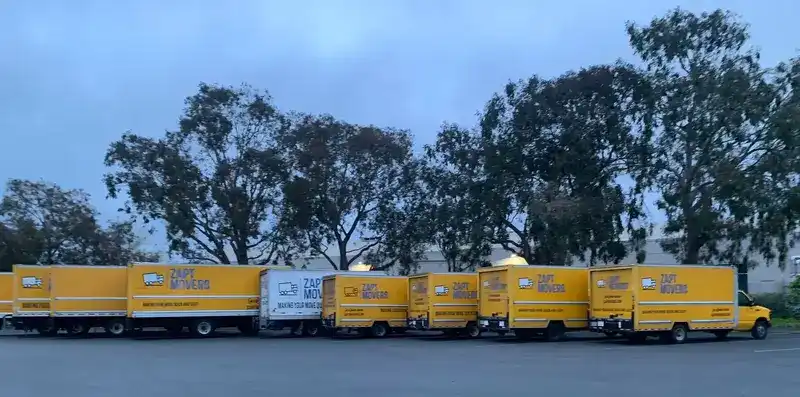
Zapt Movers notes they are licensed and insured and emphasize upfront honest pricing and fast, on-time service, which are exactly the traits you want to confirm in writing before booking.
2) Confirm access details that can change your estimate
These are common “day-of” surprises that create delays and extra labor:
If you’re considering professional packing, it is worth deciding early so the mover can schedule labor and recommend a realistic packing cadence. If you’re packing yourself, you still want a plan that starts with non-essentials.
A few small preparations can save a surprising amount of time:
Clear hallways and staircases
Set aside items that should not be loaded
Photograph high-value items for documentation
Plan wall and floor protection if you’re concerned about tight turns
72 to 24 hours before: stage your move like a project
1) Finish packing and seal decisions
Aim to be fully packed the night before (except essentials). Anything left “to figure out” becomes a moving-day bottleneck.
2) Separate what moves with you personally
Keep these items with you, not on the truck:
IDs, passports, and essential documents
Medication
Jewelry, small valuables, and small electronics you cannot replace easily
Keys, garage openers, and building fobs
3) Build a real essentials kit
Think 24 to 48 hours of living, not a vague “overnight bag.” Include chargers, basic tools, toiletries, trash bags, and a small box cutter.
Moving day: keep it calm and keep it clear
1) Do a quick walkthrough before loading begins
Point out:
Boxes that are fragile
Items not going
Furniture that needs disassembly (if applicable)
Any building rules or loading restrictions
2) Stay available for decisions, but avoid micromanaging
If you are present and reachable, the crew can keep moving without stopping to hunt you down for every question.
3) Final walkthrough before the truck leaves
Check closets, cabinets, garage corners, patios, and behind doors. Most “left behind” items come from these spots.
First 7 days after: stabilize your life first, then perfect the unpack
1) Unpack by function, not by room
Start with what restores normal life:
Beds and bedding
Bathroom basics
A minimal kitchen setup
Work setup (if you work from home)
2) Document any issues immediately
If anything is damaged, document it right away with photos and notes. Prompt documentation helps any claims process go more smoothly.
3) Save your move notes for 30 days
Keep:
Your estimate and scope confirmation
Any inventory notes
Receipts and payment confirmation
A simple rule for choosing the right timeline pace
If your move includes long-distance delivery, packing services, storage, or specialty items, use the longer lead time (6 to 8 weeks). If it’s a smaller local move with minimal furniture, you may compress the plan, but you should still book early if you have a fixed date.
How far in advance should I book moving relocation services in California? Many people aim for 4 to 6 weeks, but 6 to 8 weeks is safer for weekends, end-of-month moves, long-distance relocations, or buildings that require reservations and paperwork.
What details do movers need to give an accurate quote? Typically: zip codes, move date, home size, access details (stairs, elevators, parking), packing needs, and any specialty items. More detail usually means fewer surprises.
What should I pack myself instead of putting it on the truck? Keep IDs, medications, essential documents, valuables, and anything you cannot replace quickly with you.
What is the biggest reason moving timelines fall apart? Packing too late. Even with great movers, packing delays create loading delays, which often triggers stress, overtime, or rescheduling.
Do long-distance moves require a different timeline than local moves? Yes. Long-distance moves benefit from earlier planning around inventory accuracy, documentation, and delivery windows. Give yourself more buffer time.
Ready to schedule a smooth move with Zapt Movers?
If you want your timeline to stay intact, the biggest lever is booking reliable help early and defining the scope clearly. Zapt Movers provides professional residential, commercial, local, and long-distance moving, plus packing, storage, and specialty item handling, with upfront honest pricing, flexible payment options, and a team focused on being fast and on-time.
Get started by requesting a free quote and locking in your move date through Zapt Movers.
Let’s Make Your Next Move Effortless and Worry-Free
Get a free, no-obligation moving quote in under 60 seconds. Our team is available 7 days a week to answer your questions and help you plan the perfect move. Call us, fill out our form, or book online — we’ll take it from there.
Let’s Make Your Next Move Effortless and Worry-Free
Get a free, no-obligation moving quote in under 60 seconds. Our team is available 7 days a week to answer your questions and help you plan the perfect move. Call us, fill out our form, or book online — we’ll take it from there.
Let’s Make Your Next Move Effortless and Worry-Free
Get a free, no-obligation moving quote in under 60 seconds. Our team is available 7 days a week to answer your questions and help you plan the perfect move. Call us, fill out our form, or book online — we’ll take it from there.