Full Service Moving Company Near Me: A Room-by-Room Plan
If you’re searching “full service moving company near me”, you’re probably trying to buy back time: fewer late nights with boxes, fewer surprises on moving day, and fewer “where did we pack the coffee?” moments.
If you’re searching “full service moving company near me”, you’re probably trying to buy back time: fewer late nights with boxes, fewer surprises on moving day, and fewer “where did we pack the coffee?” moments.
Full-service movers can handle packing, loading, transport, unloading, and sometimes storage. But even with pros doing the heavy lifting, the smoothest (and most cost-controlled) moves still follow one rule: your home needs a plan.
Below is a practical, room-by-room system you can use whether you’re moving across town in California or planning a long-distance relocation.
What “full service” really changes (and what it doesn’t)
A full-service crew can wrap furniture, box up kitchens, and move everything safely. What it does not automatically solve is decision-making: what’s staying, what’s going, what’s fragile, what’s high value, what needs to be accessible on night one, and what can’t legally be transported.
Think of full service like hiring a professional kitchen staff. They can cook fast, but you still need a menu.
Before the room-by-room work: set up your “moving command center”
Do this once, and every room gets easier.
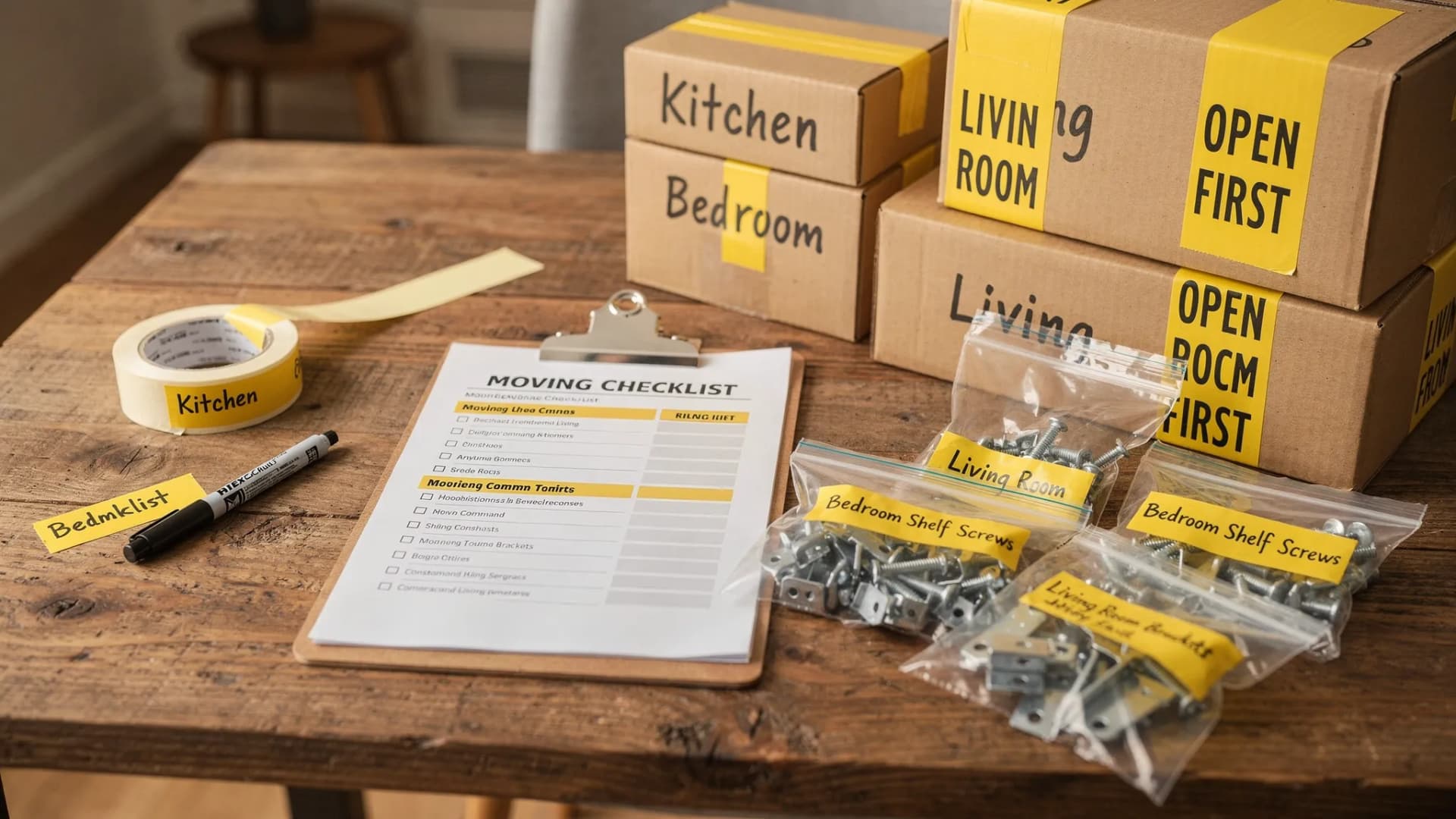
Pick one spot (kitchen counter, hallway table, or a folding table) and stock it with:
Painter’s tape and a Sharpie
Zip-top bags (hardware, remotes, cords)
A notebook or notes app for box counts and photos
Trash bags and a donation bag/box
Scissors, box cutter, and a small tool kit
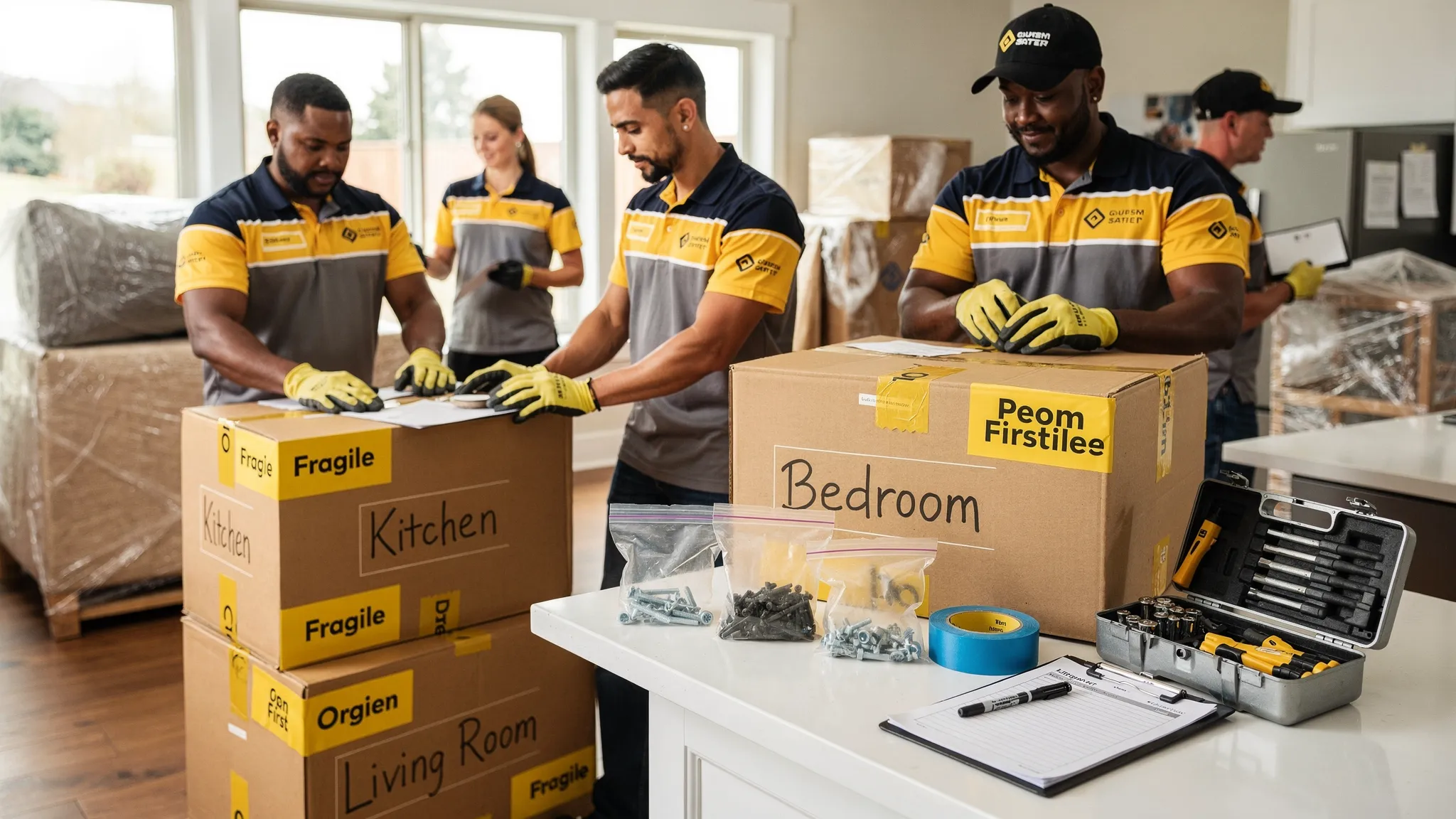
Use a labeling system movers can follow at speed
Movers work quickly. Your labels need to be readable from six feet away.
A simple format:
Room name (primary)
Priority (Open First, Week 1, Storage)
Handling (Fragile, This Side Up)
Here’s an example you can copy:
Label element
Example
Why it works
Room
KITCHEN
Fast destination decisions
Priority
OPEN FIRST
You get essentials immediately
Handling
FRAGILE / THIS SIDE UP
Reduces breakage and rework
The room-by-room plan (what to do, what to set aside, what to tell your movers)
You can do this over several days, or you can do it in focused blocks. Either way, finish one room before starting the next. Half-packed rooms are where breakage, lost parts, and delays start.
1) Entryway and hall closets (the hidden time sink)
These spaces are small but packed with awkward items.
Prep actions:
Create a “Do Not Load” zone (keys, documents, medication, laptops, pet supplies).
Bag and label hardware for console tables, wall hooks, mirrors, and coat racks.
Photograph how umbrella stands, shoe racks, or entry cabinets are arranged if you want them reassembled the same way.
What to tell your mover:
If the building needs elevator reservations or COIs for move-in, share that early. It affects arrival windows and crew sizing.
2) Living room (furniture protection and electronics control)
Living rooms have a mix of bulky, fragile, and high-value items.
Prep actions:
Take photos of cable setups before you unplug anything.
Put all remotes and small accessories in one labeled bag and keep it with your “Open First” box.
Remove batteries from rarely used devices if they’re going into storage.
Set aside art, glass decor, or collectibles you want packed with extra care.
Mover coordination tips:
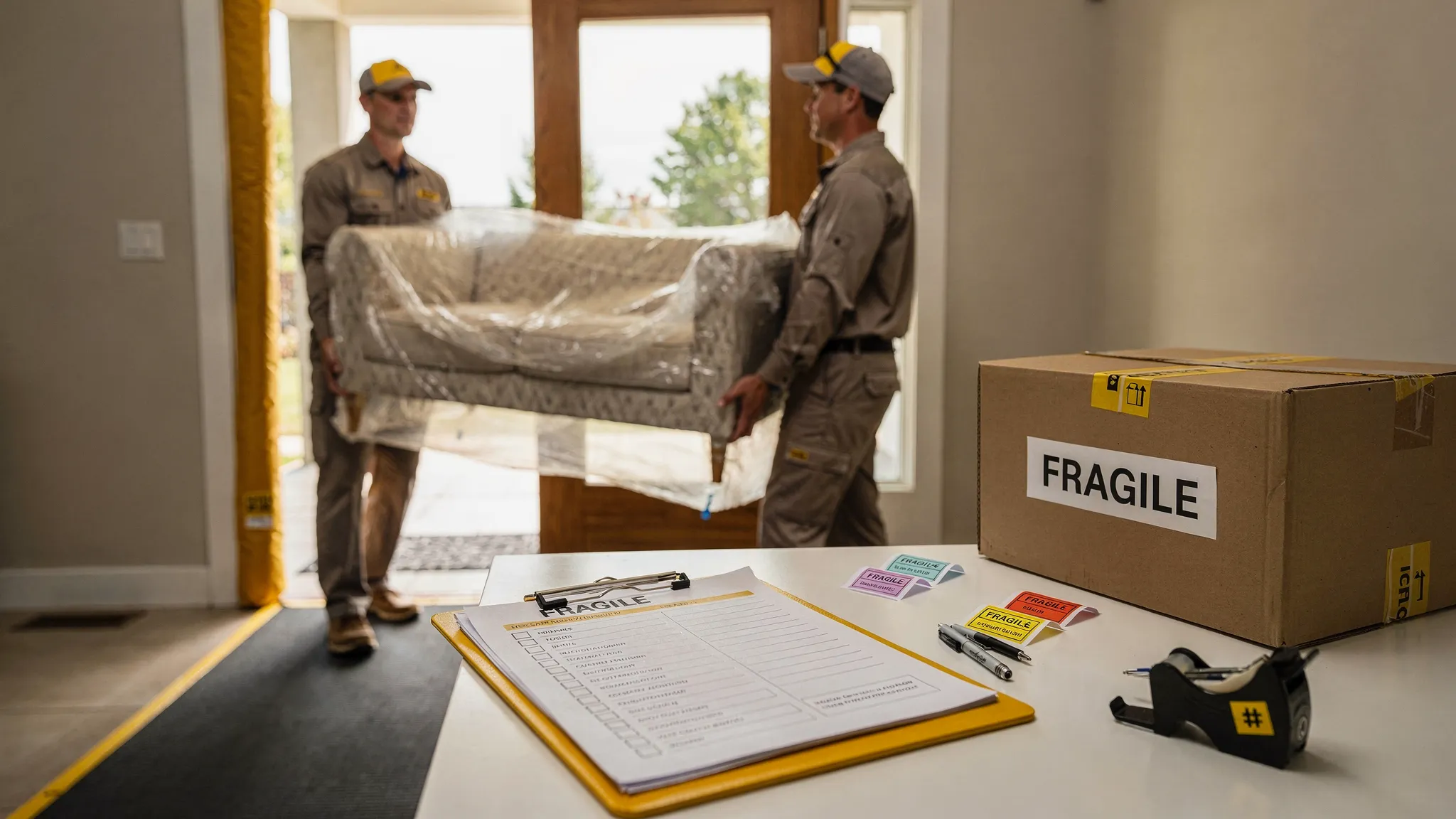
Ask how they protect upholstered furniture (standard is wrap and pads, but practices vary).
Identify any items that need special handling (large mirrors, marble tops, oversized TVs).
3) Kitchen (the highest breakage risk room)
Kitchens are where full-service packing earns its keep. The goal is to reduce decision fatigue and keep the crew moving.
Prep actions:
Toss expired food and open liquids you won’t transport.
Separate anything that cannot go on a moving truck (flammables, cleaning chemicals, aerosols). Movers commonly cannot legally transport hazardous materials.
Group appliances with their parts (mixer plus attachments, blender plus pitcher).
Decide what you need for the first 24 hours (coffee, mugs, one pan, one knife).
What to set aside for yourself:
A small “Arrival Kitchen” bag: trash bags, paper towels, dish soap, sponge, one roll of toilet paper (yes, kitchen plan, but it saves you later).
4) Bedrooms (speed comes from sorting, not boxing)
Bedrooms go fast when closets are managed correctly.
Prep actions:
Separate clothing into three categories: Pack, Donate, Week 1.
Keep one suitcase per person for essentials (sleepwear, toiletries, a change of clothes).
Bag screws and label bed hardware if anything is disassembled.
If movers are packing:
Point out sentimental items and anything fragile (photo albums, keepsakes) so they can use the right materials and placement.
5) Closets (where moves quietly get expensive)
Closets tend to create extra labor time because items are dense and often unsorted.
Prep actions:
Consolidate loose items into bins or boxes before packing day.
Label by category (Shoes, Handbags, Winter Coats) instead of “Closet Stuff.”
Remove anything you do not want packed (documents, jewelry, passports).
6) Bathrooms (leaks and lost essentials)
Bathrooms are deceptively tricky because of liquids and small items.
Prep actions:
Tape shampoo caps and bag liquids together to prevent leaks.
Discard nearly-empty bottles. They cost more to move than to replace.
Pack a clearly labeled “OPEN FIRST: Bathroom” box with toiletries, towels, and hygiene basics.
7) Home office (protect data, not just devices)
For home offices, damage risk is only half the problem. The other half is losing access to passwords, devices, or paperwork during the transition.
Prep actions:
Back up key data before the move.
Photograph your router/modem setup and label each cable.
Pack chargers and adapters in one bag.
Keep sensitive documents with you.
If you’re relocating a business office (or moving regulated records):
Create a chain-of-custody list for sensitive files.
Label boxes “Confidential” and instruct that they stay together.
Consider a compliance workflow for the transition (especially if policies, audits, or remediation tasks are in motion). Tools like Naltilia’s AI-powered compliance platform can help teams streamline regulatory work while major operational changes, like an office move, are happening.
8) Garage, shed, and outdoor storage (where “unknown inventory” lives)
Garages cause last-minute delays because they contain heavy, sharp, and restricted items.
Prep actions:
Separate hazardous materials early (paint, propane, gasoline, pesticides). Ask your mover what they cannot transport.
Bundle yard tools and protect sharp ends.
Drain fuel from equipment you plan to transport yourself.
Box and label small parts (grill accessories, bike tools).
9) Laundry room (prevent spills and door damage)
Prep actions:
Empty detergent shelves and bag liquids.
Leave washer doors open for a while before moving day to reduce odor.
Confirm whether appliance disconnect and reconnect are included. Many moving companies transport appliances, but plumbing or gas reconnection may require a licensed specialist.
A quick “room-by-room readiness” checklist you can send to your mover
To reduce confusion and speed up the walkthrough, you want each room to have a clear status.
Room status
What it means
What movers should do
Ready to pack
Everything stays, nothing is sensitive
Pack and box the room
Partially staged
Some items stay with you
Pack only items not marked “Do Not Load”
Owner packed
Already boxed and sealed
Load and protect boxes
High value
Fragile or expensive
Confirm special materials and placement
Moving day: how to manage a full-service crew (without micromanaging)
Full-service moving works best when you do one thing well: make fast decisions.
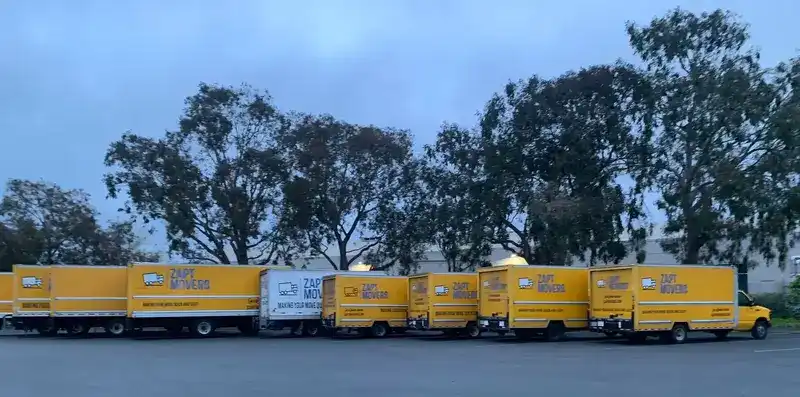
Where Zapt Movers fits if you’re moving in California
If your goal is to hire a full service moving company near me and you’re relocating in California (locally or long-distance), Zapt Movers offers residential and commercial moves, professional packing, secure storage options, and specialty item handling, with upfront honest pricing and licensed and insured crews.
If you want a smoother quote process, the fastest next step is to prepare a simple inventory by room (even a quick list) and request a quote based on that scope. The more clearly you define what gets packed, what stays with you, and what needs special handling, the more predictable your move becomes.
Let’s Make Your Next Move Effortless and Worry-Free
Get a free, no-obligation moving quote in under 60 seconds. Our team is available 7 days a week to answer your questions and help you plan the perfect move. Call us, fill out our form, or book online — we’ll take it from there.
Let’s Make Your Next Move Effortless and Worry-Free
Get a free, no-obligation moving quote in under 60 seconds. Our team is available 7 days a week to answer your questions and help you plan the perfect move. Call us, fill out our form, or book online — we’ll take it from there.
Let’s Make Your Next Move Effortless and Worry-Free
Get a free, no-obligation moving quote in under 60 seconds. Our team is available 7 days a week to answer your questions and help you plan the perfect move. Call us, fill out our form, or book online — we’ll take it from there.